What Is SEA Notification and How Is It Submitted via KKS?
For companies that manufacture or import chemical substances in Turkey, regulatory compliance is not limited to KKDIK registration. One of the obligations most often confused with it is SEA notification—the process of notifying the authorities of the classification and labelling of hazardous substances. The aim on the SEA side is to make the identity, classification, and labelling information of hazardous substances placed on the market visible and traceable in the Ministry’s system. This article explains what SEA notification is, who it applies to, how it is done via KKS, and how it differs from KKDIK.
What exactly is SEA notification?
Under SEA (the Regulation on the Classification, Labelling and Packaging of Hazardous Substances and Preparations), once a hazardous chemical substance is placed on the market, the identity, classification, and labelling information for that substance must be notified to the competent authority. This is not “just filling in a form”: it means entering substance identity, hazard classes, labelling elements, and related technical information into the system in a consistent and traceable way so that the Ministry can monitor the inventory and classification/labelling compliance of hazardous substances on the market.
SEA and KKDIK must not be confused. KKDIK deals with the registration regime for chemical substances and tonnage-based obligations. SEA focuses on the notification of classification and labelling information for hazardous substances placed on the market. So one is a “registration regime”; the other is a “classification and labelling inventory” mechanism. Both obligations can apply to the same company, but the processes, timelines, and modules in KKS are different.
Who must submit SEA notification?
The obligation to notify under SEA falls on the manufacturer or importer who first places the hazardous chemical substance on the Turkish market. So the legal or natural person that produces the substance or imports it into Turkey and places it on the market is responsible for submitting the classification and labelling notification for that substance. Distributors or downstream users who do not place the substance on the market for the first time under their own name are not directly subject to this notification obligation, but correct information flow and compliant labelling in the supply chain concern everyone.
Companies should not focus only on “tonnage” and overlook SEA. Even where KKDIK provides registration exemptions below certain tonnage thresholds, if the substance is hazardous, SEA notification remains a separate obligation. So for each hazardous substance in the portfolio, the question “Is this substance within SEA scope, and has it been notified?” must be answered.
When must the notification be made?
Under Article 41 of the SEA Regulation, notification must be made within 1 month of the first placing on the market of the hazardous substance. So the “1 month following placing on the market” rule is a deadline that should not be left to the last minute in operational planning. Late notification creates risk of enforcement and compliance gaps. It is important to mark this period clearly in the calendar and to gather the required data (substance identity, classification, labelling) in advance and submit it through the correct module in KKS.
How is SEA notification made via KKS?
In the official KKS flow, the module used for SEA notification is the Classification and Labelling Notification module. The pre-MBDF (pre-registration dossier) module is related to KKDIK registration processes and is not the main flow for SEA notification; for SEA, the user is directed to the Classification and Labelling Notification module. The process typically runs as follows:
-
EÇBS/KKS access and system check
The company accesses the Ministry’s Electronic Chemical Information System (EÇBS) and Chemical Registration System (KKS). User accounts and authorisations should be up to date. -
Select the substance and the process
In KKS, the substance to be notified is selected via substance management or the relevant menu. The “Classification and Labelling Notification” process for SEA is opened. -
Enter the Classification and Labelling Notification module
This module contains the fields specific to SEA: company identity, substance identity, classification (hazard class and category), labelling information (hazard statements, signal word, pictograms), and related technical fields. -
Data consistency
The classification on the SDS/GBF and label must be consistent with the data entered in KKS. Incomplete or contradictory data creates a risk of later corrections and scrutiny. Fields should be filled in line with existing technical documents (SDS, test reports, classification rationale). -
Submission and follow-up
After submission, the status in the system is monitored. If the authority requests additional information, it should be provided within the given period.
This flow is consistent with the Ministry’s KKS user guide and KKS entry guide. For SEA-specific guidance, the SEA basic guide and SEA regulation amendment (4 September 2018) can be used as references.
What information is submitted in the notification?
The Classification and Labelling Notification module typically requests company details, substance identity (e.g. EC/CAS numbers), classification outcome (GHS hazard class and category), labelling elements (H and P statements, signal word, pictogram), and any additional notes. This information must be consistent with the SDS and label; the classification rationale should be defensible with existing technical data and assessment reports. If data is missing or insufficient, a professional approach is to review the SDS/GBF and classification documents before submitting.
What is the main difference between SEA and KKDIK?
In short: KKDIK operates as a tonnage and registration regime; which substances fall under registration and how pre-registration, temporary registration, and full registration work are handled through the KKDIK modules in KKS. SEA is about notifying the Ministry of the classification and labelling inventory of hazardous substances placed on the market; the main KKS module is “Classification and Labelling Notification”. The same substance may be subject to both KKDIK registration and SEA notification; but the processes, deadlines, and modules differ. Companies should plan both obligations separately in their calendar.
Practical compliance tips for companies
- Screen your substance portfolio: List which substances are hazardous and which have been placed on the market; identify those not yet notified under SEA.
- Respect the deadline: Enter the 1-month period following placing on the market in your calendar; do not leave notification to the last day.
- Use the correct module: In KKS, use the Classification and Labelling Notification module for SEA; do not confuse the process with the pre-MBDF flow.
- Ensure data consistency: The notification in KKS should reflect the same classification and labelling logic as the SDS/GBF and label.
- Internal links: You can review scope on our KKDIK service page and SDS preparation service, and contact us for process support.
Short conclusion
SEA notification is a distinct obligation that must be fulfilled on time by companies placing hazardous chemical substances on the market in Turkey. Unlike the KKDIK registration regime, the focus is on communicating classification and labelling information to the Ministry via KKS (through the Classification and Labelling Notification module). The deadline (1 month after placing on the market), the correct module, and consistent data are the cornerstones of compliance. Companies that plan this process early and do not underestimate it reduce both administrative risk and build a reliable position from a regulatory consultancy perspective.
FAQ (4 questions)
What is the deadline for SEA notification?
Under SEA Regulation Article 41, notification must be made within 1 month of the first placing on the market of the hazardous substance.
Which system is used for SEA notification?
Notification is made via the Classification and Labelling Notification module in the Ministry's Chemical Registration System (KKS).
Is pre-MBDF required for SEA?
The official KKS flow for SEA is based on the Classification and Labelling Notification module. Pre-MBDF is not the main process for SEA notification.
Are SEA and KKDIK the same?
No. SEA focuses on the notification of classification and labelling information for hazardous substances; KKDIK is a registration regime focused on tonnage and registration. They create different obligations.
Frequently asked questions
- What is the deadline for SEA notification?
- Under SEA Regulation Article 41, notification must be made within 1 month of the first placing on the market of the hazardous substance.
- Which system is used for SEA notification?
- Notification is made via the Classification and Labelling Notification module in the Ministry's Chemical Registration System (KKS).
- Is pre-MBDF required for SEA?
- The official KKS flow for SEA is based on the Classification and Labelling Notification module. Pre-MBDF is not the main process for SEA notification.
- Are SEA and KKDIK the same?
- No. SEA focuses on the notification of classification and labelling information for hazardous substances; KKDIK is a registration regime focused on tonnage and registration. They create different obligations.
Related Posts
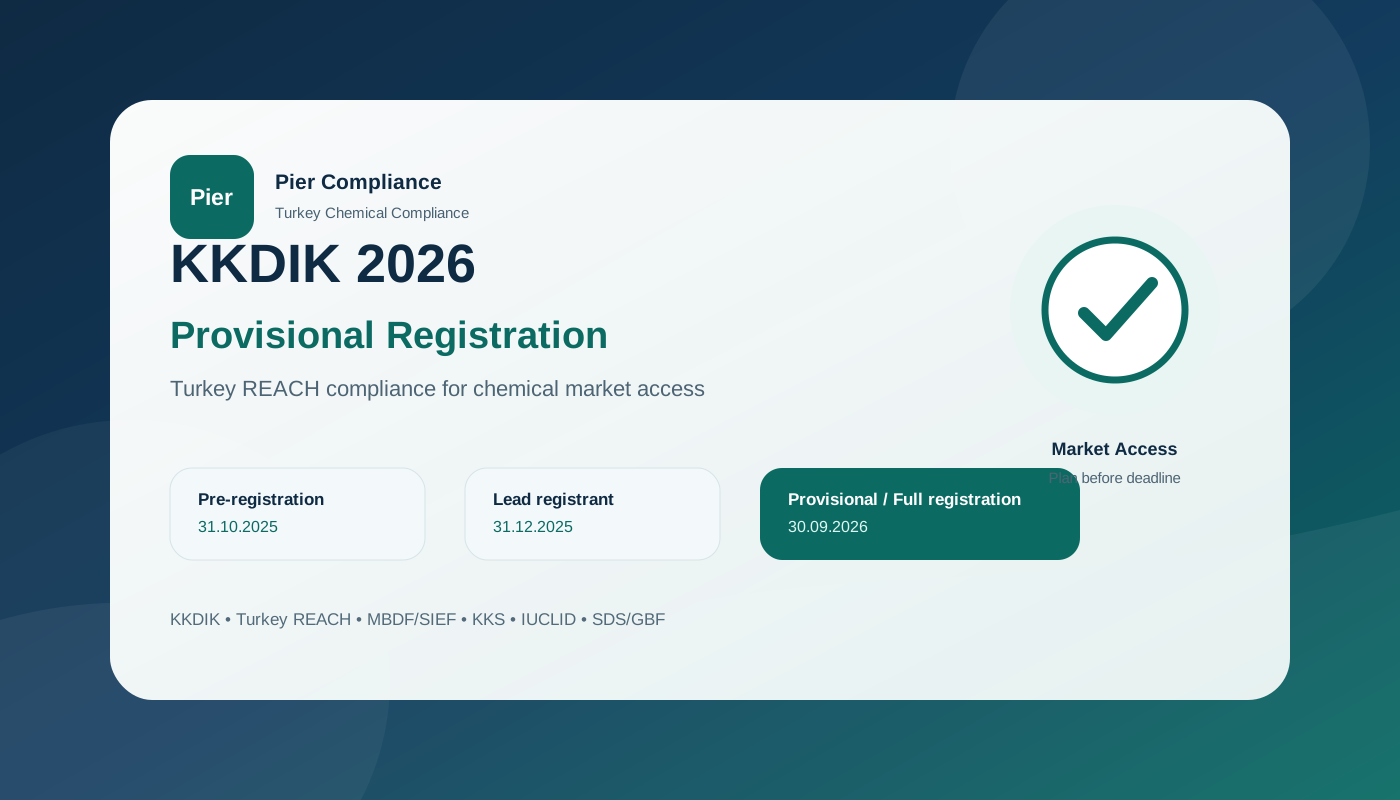
KKDIK Registration and Consulting Services 2026: Provisional Registration, Individual Filing and Turkey REACH Compliance
Pier Compliance supports companies with KKDIK 2026 pre-registration, MBDF/SIEF, lead and co-registration, individual provisional registration, full registration, KKS and IUCLID dossiers.
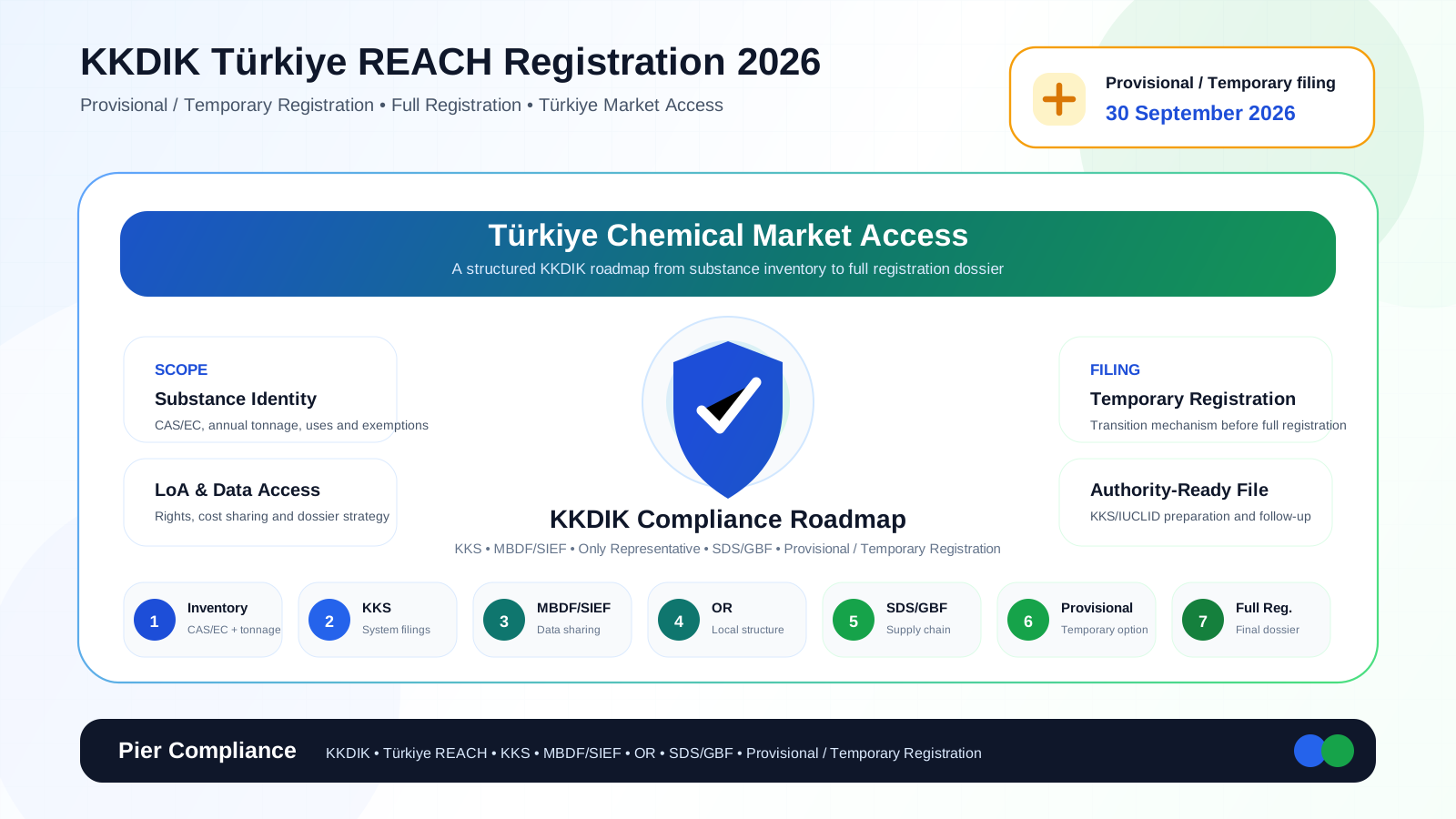
KKDIK Türkiye REACH Registration Guide 2026: Provisional / Temporary Registration, Full Registration and Market Access
A practical guide to KKDIK Türkiye REACH registration, the 30 September 2026 provisional / temporary registration deadline, Only Representative services, MBDF/SIEF, SDS, LoA and full registration strategy.
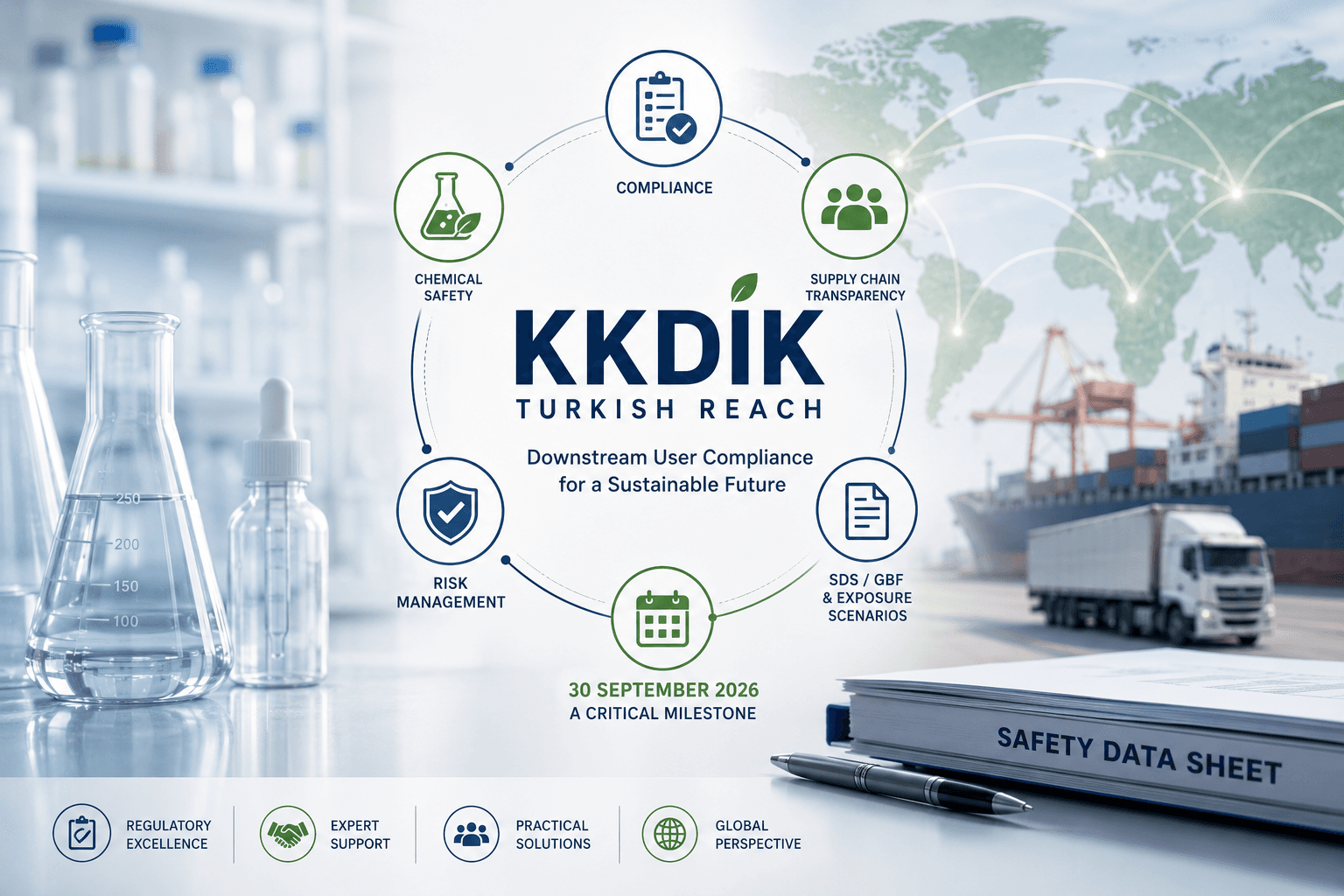
KKDIK Downstream Users: What You Need to Know Before 30 September 2026
Before the 30 September 2026 KKDIK interim registration milestone, downstream users should review use notification, SDS alignment, exposure scenarios and supply-chain roles. Pier Compliance supports role mapping and Chemical Assessment Specialist–approved SDS.