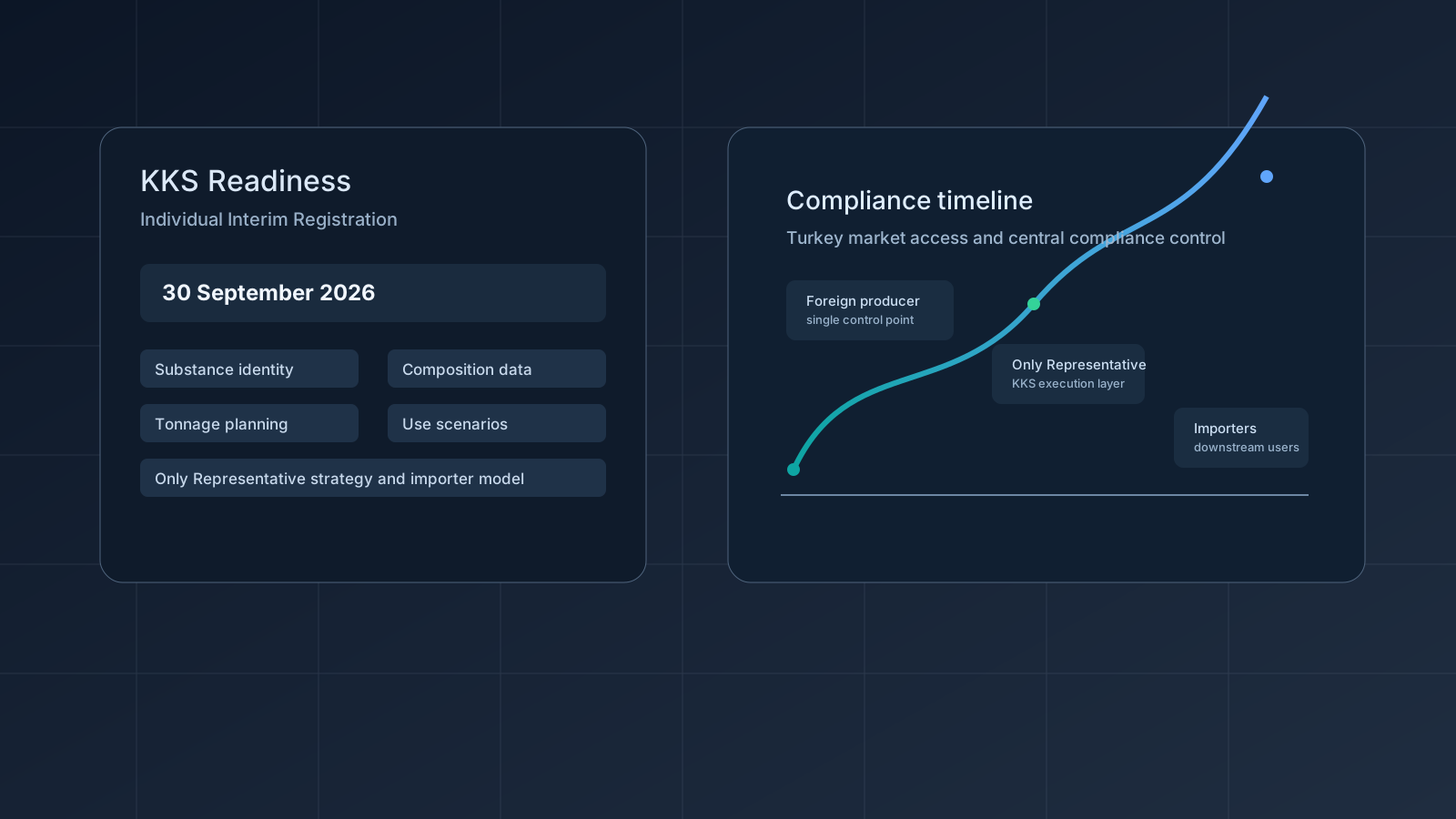
KKDIK Individual Interim Registration 2026: Which KKS Data Must Be Ready Before 30 September?
Answer-first summary: As of 24 April 2026, the strategic question is no longer whether individual interim registration is possible. The real question is whether your KKS dataset is complete, structured, and defensible before 30 September 2026.
Why 30 September 2026 is critical
This is not just a calendar date. It is the point by which companies choosing individual interim registration should have a technically prepared and operationally planned KKS file. Leaving preparation to the final weeks can create severe pressure on substance identity, composition, analytical data, use profile, tonnage, and installation records.
What individual interim registration means
Individual interim registration is a practical path when joint registration workflows are blocked by lead registrant uncertainty, data-sharing constraints, or coordination failures. It is not an automatic shortcut; the dossier must explicitly justify why the individual route is used.
Which KKS data should be ready
- substance identification
- substance composition
- analytical information
- supplier and supply-chain data
- classification and labeling data
- manufacture/import/use/exposure information
- estimated quantities and tonnage logic
- installation-level details
- mixture-use information where applicable
- non-recommended uses
- core physicochemical properties
- safe-use guidance logic
What if data is missing
Missing data does not automatically end the process. However, each gap must be justified with technically credible reasoning. Companies should therefore map, at substance level, what is available, what is missing, and how each gap will be managed under KKS logic.
Why only representative belongs in this discussion
KKDIK is strategic not only for importers in Turkey but also for foreign manufacturers placing chemicals on the Turkish market. A non-Turkey manufacturer, formulator, or article producer may appoint an only representative in Turkey and centralize importer obligations through one control point.
When an only representative is appointed, importers move into downstream user position while registration responsibility is centrally managed. For multi-importer structures, this can protect continuity, improve tonnage governance, and reduce fragmented compliance execution.
What companies should do now
- Build a substance-level 30 September preparation plan
- Open KKS data headings per substance
- Separate available data from missing data
- Clarify tonnage and installation logic
- Evaluate whether only representative setup is needed
- Define foreign manufacturer–importer–OR operating model
- Plan KDU-supported data entry and dossier coordination early
How Pier Compliance supports
Pier Compliance combines regulatory interpretation with technical and operational execution. We support:
- KKDIK scope and obligation analysis
- interim registration strategy design
- KKS data structuring in dossier logic
- missing-data and justification framework
- only representative setup/review
- Turkey market access planning for foreign manufacturers
- KDU-supported process management
- integrated planning with SDS preparation and broader chemical compliance
Key Takeaways
- 30 September 2026 is a dossier readiness threshold, not only a date.
- Interim registration quality depends on data architecture and justification discipline.
- Only representative structures support centralized control for multi-importer supply chains.
- Last-week KKS loading increases technical and commercial risk.
Conclusion
Approaching 30 September 2026, the right strategy is to open and structure the dataset now, not to wait. The right strategy is not to hide missing data, but to justify it credibly. The right strategy is not last-week file assembly, but KKS-aligned build-up from today.
For manufacturers, importers, and foreign suppliers aiming to sustain Turkey market access, KKDIK individual interim registration and only representative strategy are no longer deferrable topics.
FAQ
Is 30 September 2026 the critical date for interim registration planning?
Yes. It is the practical deadline by which the KKS file should be technically prepared.
Is KKS the channel for individual interim registration submission?
Yes, with explicit and defensible rationale.
Does missing data automatically block filing?
Not automatically, but unsupported gaps create major risk.
Why do foreign manufacturers consider only representative models?
To centralize obligations and reduce dependency on a single importer structure.
Where can I start with Pier Compliance?
See our KKDIK service, contact page, and about-us page.
Frequently asked questions
- What is the key KKDIK date for individual interim registration?
- 30 September 2026 is the critical operational deadline for KKS-ready files.
- Can interim registration be submitted via KKS?
- Yes. The file is submitted through KKS with clear technical justification.
- Can missing data be managed?
- Yes, if gaps are documented and justified in a technically defensible way.
- Why is the only representative model important?
- It centralizes importer obligations for non-Turkey manufacturers and supports market continuity.
Related Posts
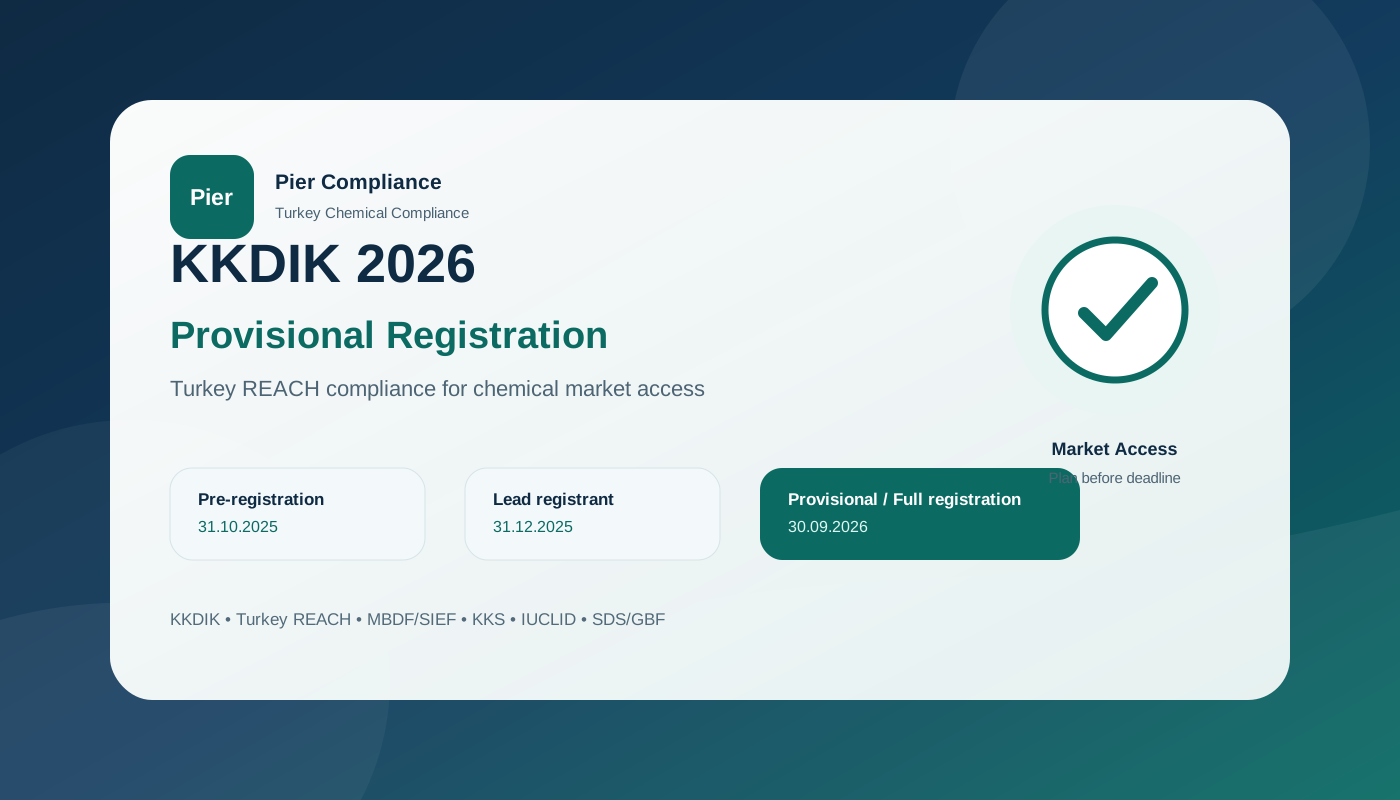
KKDIK Registration and Consulting Services 2026: Provisional Registration, Individual Filing and Turkey REACH Compliance
Pier Compliance supports companies with KKDIK 2026 pre-registration, MBDF/SIEF, lead and co-registration, individual provisional registration, full registration, KKS and IUCLID dossiers.
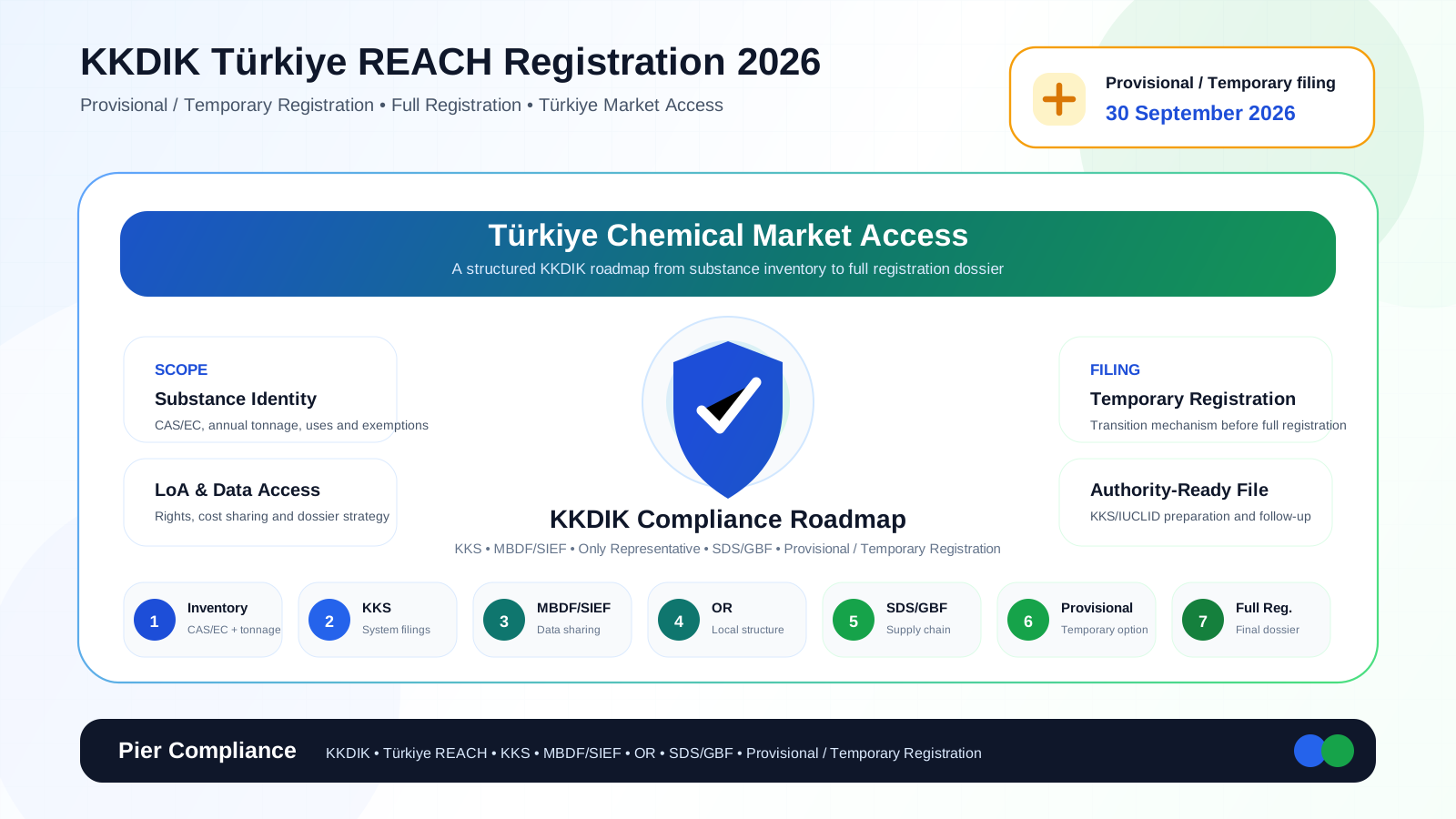
KKDIK Türkiye REACH Registration Guide 2026: Provisional / Temporary Registration, Full Registration and Market Access
A practical guide to KKDIK Türkiye REACH registration, the 30 September 2026 provisional / temporary registration deadline, Only Representative services, MBDF/SIEF, SDS, LoA and full registration strategy.
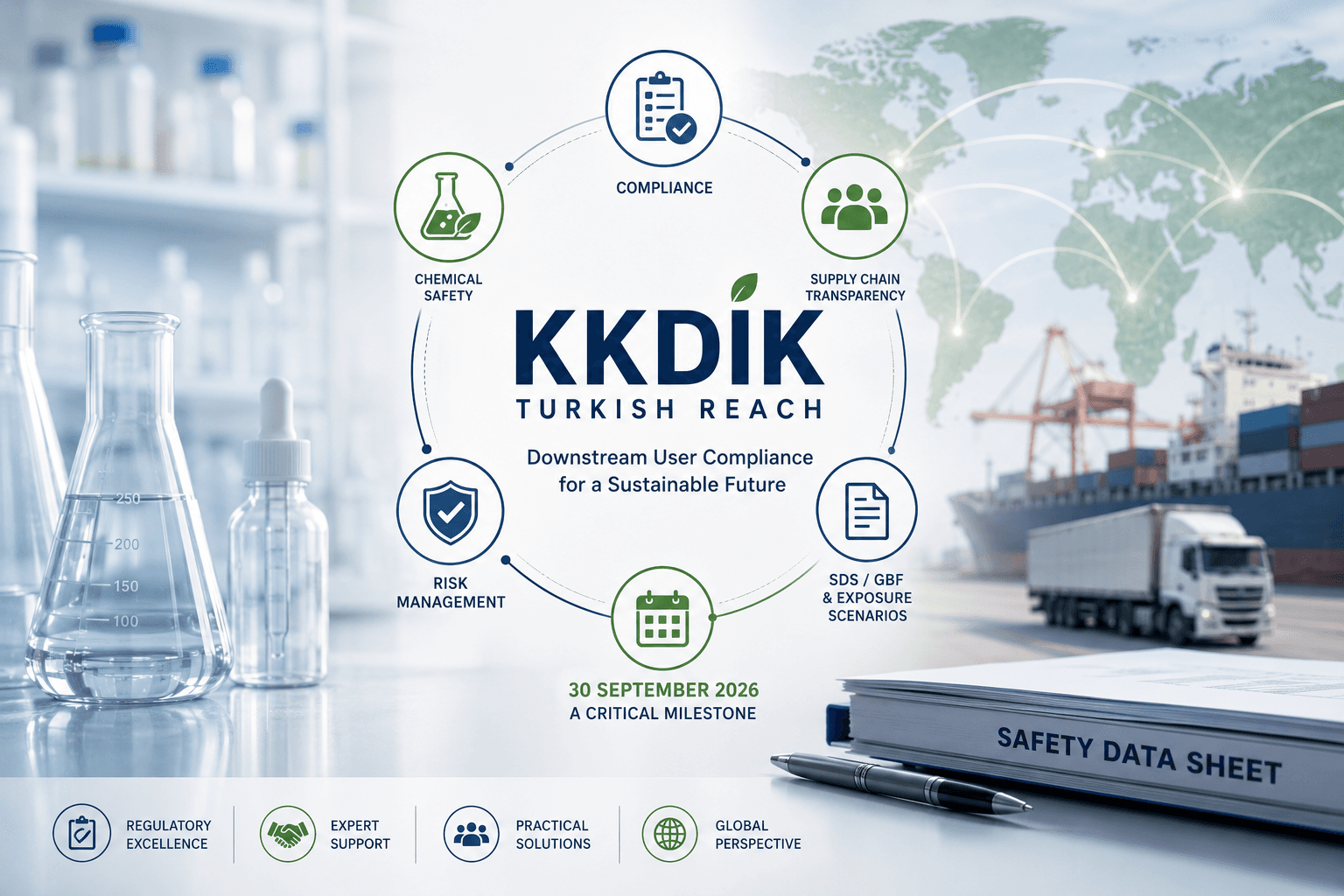
KKDIK Downstream Users: What You Need to Know Before 30 September 2026
Before the 30 September 2026 KKDIK interim registration milestone, downstream users should review use notification, SDS alignment, exposure scenarios and supply-chain roles. Pier Compliance supports role mapping and Chemical Assessment Specialist–approved SDS.