
What Is an SDS (Safety Data Sheet) and Who Prepares It in Turkey?
A Safety Data Sheet (SDS) is the most visible technical compliance artefact for hazardous chemicals in international trade. For Türkiye, the same regulatory function is often discussed domestically with terminology mapped to the national safety-data-sheet framework (market participants may reference Turkish “GBF” language in local filings even when global teams standardise on “SDS”). What matters commercially is consistent hazard communication: the SDS must match classification and labelling reality, be accessible to downstream users, and withstand audits.
This article explains why an SDS is not a product leaflet, how KKDIK and SEA shape expectations in Türkiye, and why a Chemical Assessment Specialist is central to credible authoring.
For execution support, see our SDS preparation service, KKDIK programme notes, and the SEA notification guide. Contact Pier Compliance for case-specific structuring.
What is an SDS (Safety Data Sheet)?
An SDS is a 16-section document that organises hazard information, precautionary language, exposure controls, accidental release guidance, transport classes (where applicable) and regulatory references. It is used by employers, emergency responders, logistics teams and customers to make consistent safety decisions about the same product.
Why an SDS is more than “just a document”
A high-quality SDS coordinates:
- Regulatory visibility during inspections and market surveillance
- Workplace safety through engineering controls, PPE and operating procedures
- Supply-chain assurance in customer audits and tender gates
- Coherent classification storytelling aligned with CLP-style logic under SEA in Türkiye
Weak SDS content does not stay theoretical: it propagates into wrong PPE, incorrect emergency response and non-compliant transport documentation.
Relationship between classification / labelling and the SDS
The label is the short message; the SDS is the long-form evidence chain. If Section 2 disagrees with the label or the SEA notification posture, stakeholders lose confidence—and regulators notice.
PBT / vPvB / SVHC-style scenarios
Certain substances require heightened disclosure and careful communication of persistence, accumulation and toxicity profiles, as well as supply-chain transparency. The SDS becomes the backbone for communicating why controls exist and how they should evolve.
Why is the Chemical Assessment Specialist critical?
A Chemical Assessment Specialist integrates:
- Physicochemical properties with classification conclusions
- Toxicology and environmental fate into proportionate control measures
- Operational realism into storage, spill and fire-fighting sections
- Revision discipline tied to regulatory updates and incoming data
In Türkiye, this role is institutionally mirrored by the KDU framework. International teams should treat “Chemical Assessment Specialist” and “KDU workflow” as the same quality gate, expressed in different legal languages.
When must an SDS be provided?
Typical trigger points include:
- Placing a new hazardous mixture on the market
- Reformulation, new raw materials or supplier-driven classification changes
- Import/export dossiers where customers or customs expect defensible hazard communication
- Employer programmes for chemical risk assessment and worker information
- Products containing components that tighten regulatory scrutiny
How should SDSs be delivered for Türkiye?
Downstream communication should be clear, technically accurate and available without friction. Turkish-language SDS expectations are central for domestic market access; English-only PDFs rarely satisfy operational and enforcement realities.
Preparing a Turkish-market SDS is not the same as translating a REACH-style EU sheet: SEA alignment, local Annex discipline and label consistency must be rebuilt, not glossed over.
Translation vs compliant (re)authoring
Translation moves words. Re-authoring validates:
- Classification rationale across Sections 2–3–8–9–11–12
- Transport consistency in Section 14
- Regulatory truthfulness in Section 15
- Sensible revision history in Section 16
What are the 16 mandatory SDS sections?
- Identification
- Hazards identification
- Composition / ingredients
- First-aid measures
- Fire-fighting measures
- Accidental release measures
- Handling and storage
- Exposure controls / personal protection
- Physical and chemical properties
- Stability and reactivity
- Toxicological information
- Ecological information
- Disposal considerations
- Transport information
- Regulatory information
- Other information—including revision management
For readable web articles, each section should carry one coherent storyline without redundant padding.
Why does SDS quality directly affect risk management?
Technical consistency means the hazard narrative is stable from Section 2 through controls and transport. Local compliance means references and language matches Türkiye’s regulatory framing (including SEA/KKDIK context where applicable). Break that consistency and operational risk rises—even if a PDF exists on file.
When should an SDS be updated?
Update following composition changes, new hazard data, classification shifts, regulatory amendments, or when customer and authority feedback reveals technical gaps.
How employers and downstream users rely on the SDS
Employers map risk assessments and training to SDS controls. Downstream users align process safety and exposure assumptions with the same text. The SDS is therefore an operational contract between supplier and user—not a marketing layer.
Frequently asked questions
What is an SDS? A structured 16-section hazard communication document for hazardous substances and mixtures.
When is it mandatory in practice? Whenever hazardous classification and supply-chain duties require defensible, current hazard information—especially under evolving SEA/KKDIK expectations in Türkiye.
Who should prepare it? A competent technical owner—implemented in Türkiye through the Chemical Assessment Specialist / KDU workflow.
Is translation enough? Rarely; re-validation against Turkish classification and regulatory context is typically required.
When must it be updated? On scientific, formulation, classification or legal changes—and whenever the document no longer reflects safe use.
Conclusion
An SDS is the public face of chemical compliance and a practical safety instrument. In Türkiye, credible programmes align Turkish hazard communication, SEA logic and KKDIK-related discipline, steered by a Chemical Assessment Specialist mindset. Quality is measured not by page count, but by audit readiness and field usability.
Further reading: SDS preparation service · KKDIK support · SEA notification · Contact
Frequently asked questions
- What is an SDS (Safety Data Sheet)?
- A Safety Data Sheet (SDS) is a 16-section structured document for hazardous substances and mixtures. It communicates hazards, risk-management measures, safe handling, storage, transport and disposal information, and supports workplace, environmental and regulatory compliance across the supply chain.
- When does an SDS become mandatory in practice?
- Hazardous classifications and supply-chain duties make an up-to-date SDS practically indispensable. Formulations with specific regulatory triggers, substances of elevated concern, PBT/vPvB-style persistence concerns, or SVHC-type significance under EU-style thinking typically demand more rigorous content and traceability. In Türkiye, alignment with SEA (classification and labelling) and KKDIK-related hazard communication expectations reinforces the need for a coherent SDS.
- Who should prepare an SDS?
- SDS authoring requires technical competence. In Türkiye, credible SDS programmes are expected to follow the Chemical Assessment Specialist (locally: KDU) model: an expert who integrates physicochemical data, human health and environmental hazard evaluation, exposure context, and control measures into one defensible document.
- Is translating a foreign SDS enough for Türkiye?
- Usually not. Translation alone rarely preserves SEA-consistent classification logic, local regulatory phrasing, transport classes, and exposure language. A compliant SDS for the Turkish market is typically re-engineered against local GHS/SEA expectations and the Annex-style discipline used in Turkish practice.
- When must an SDS be updated?
- Update when composition, hazard data, classification, labels, or regulatory requirements change, or when new supply-chain information makes statements incorrect. Stale SDS content increases inspection findings, customer rejections, and operational safety gaps.
Related Posts
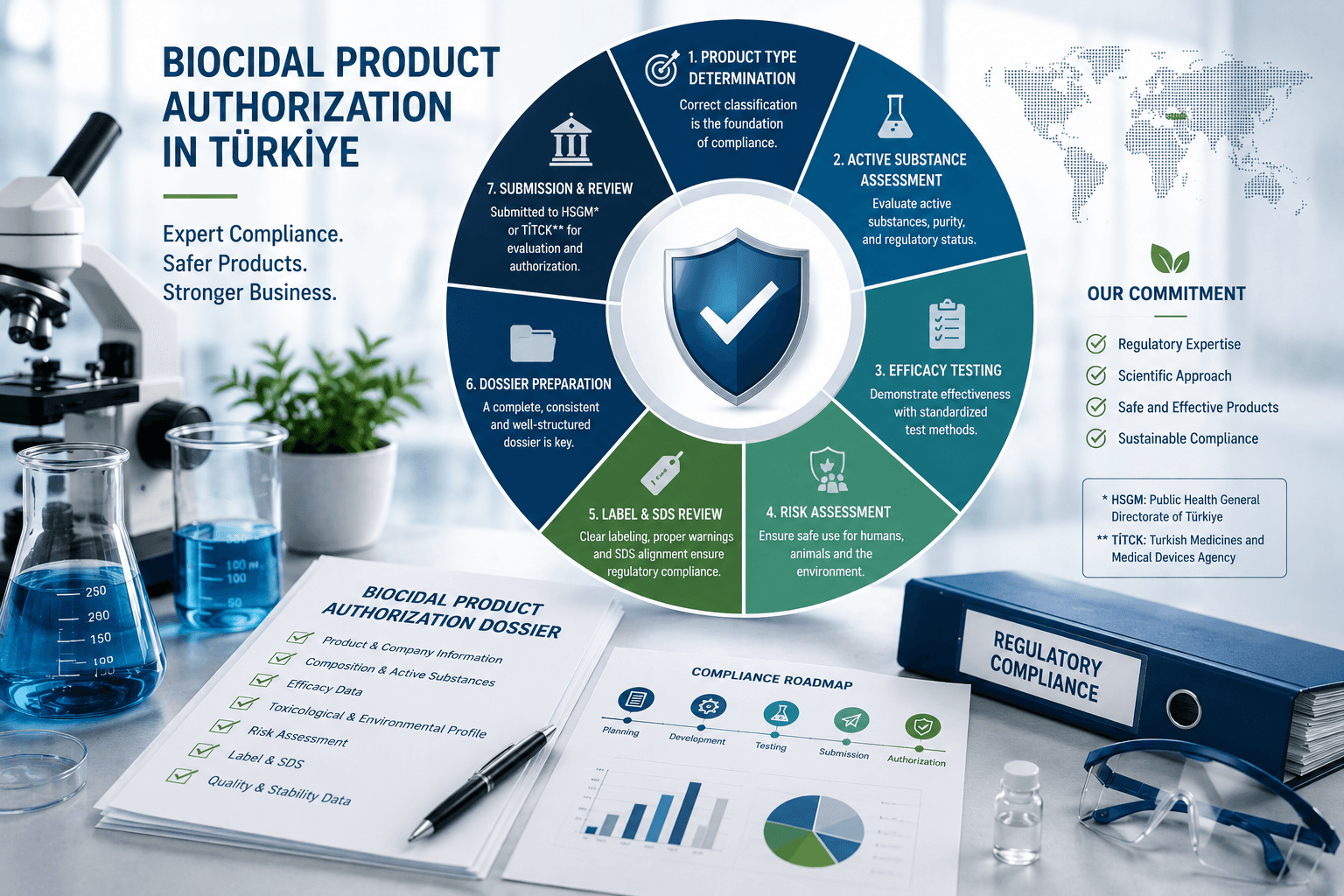
Biocidal Product Authorization in Türkiye: Technical Dossier, Active Substance and Market Access Strategy
Biocidal product authorization in Türkiye requires product-type assessment, active substance review, efficacy data, label claim control, risk assessment and a technically consistent authorization dossier.
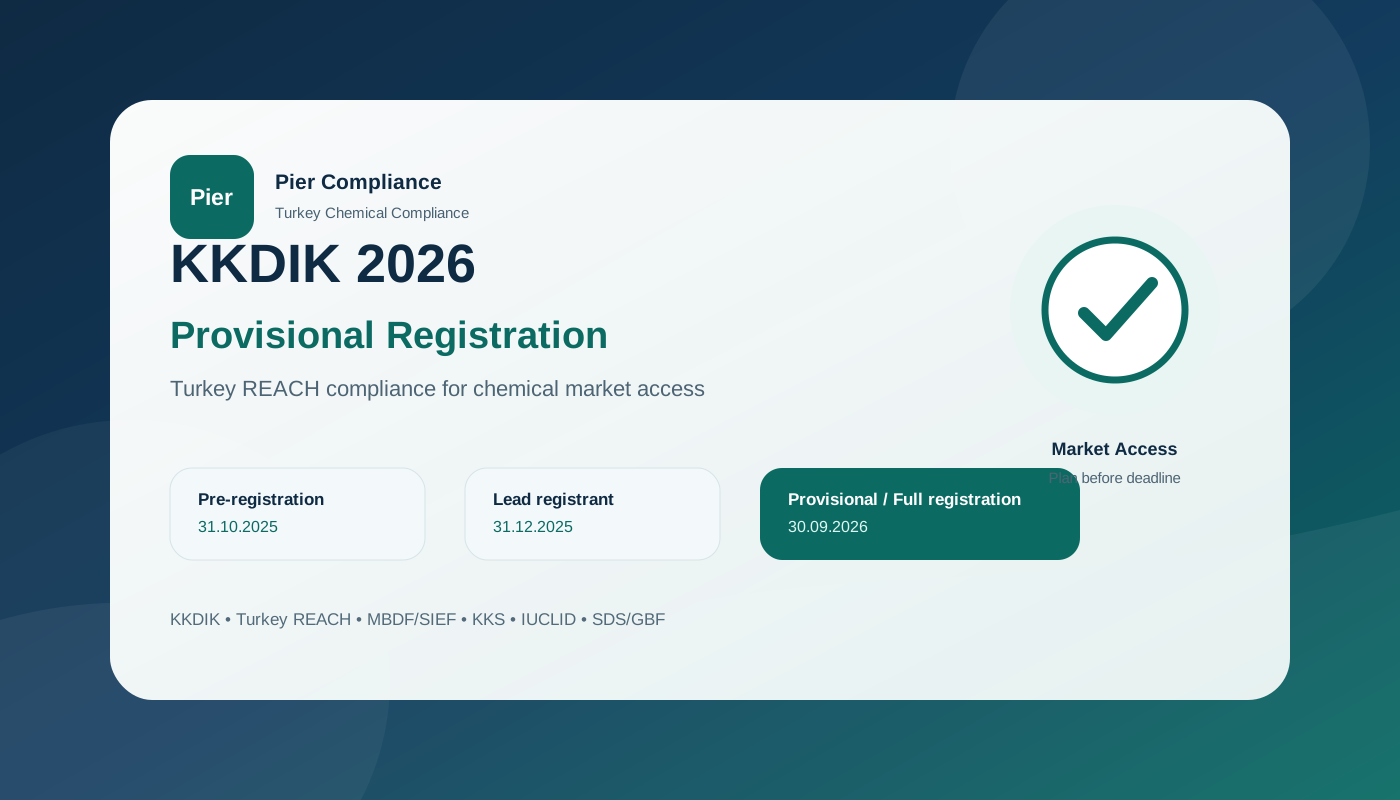
KKDIK Registration and Consulting Services 2026: Provisional Registration, Individual Filing and Turkey REACH Compliance
Pier Compliance supports companies with KKDIK 2026 pre-registration, MBDF/SIEF, lead and co-registration, individual provisional registration, full registration, KKS and IUCLID dossiers.
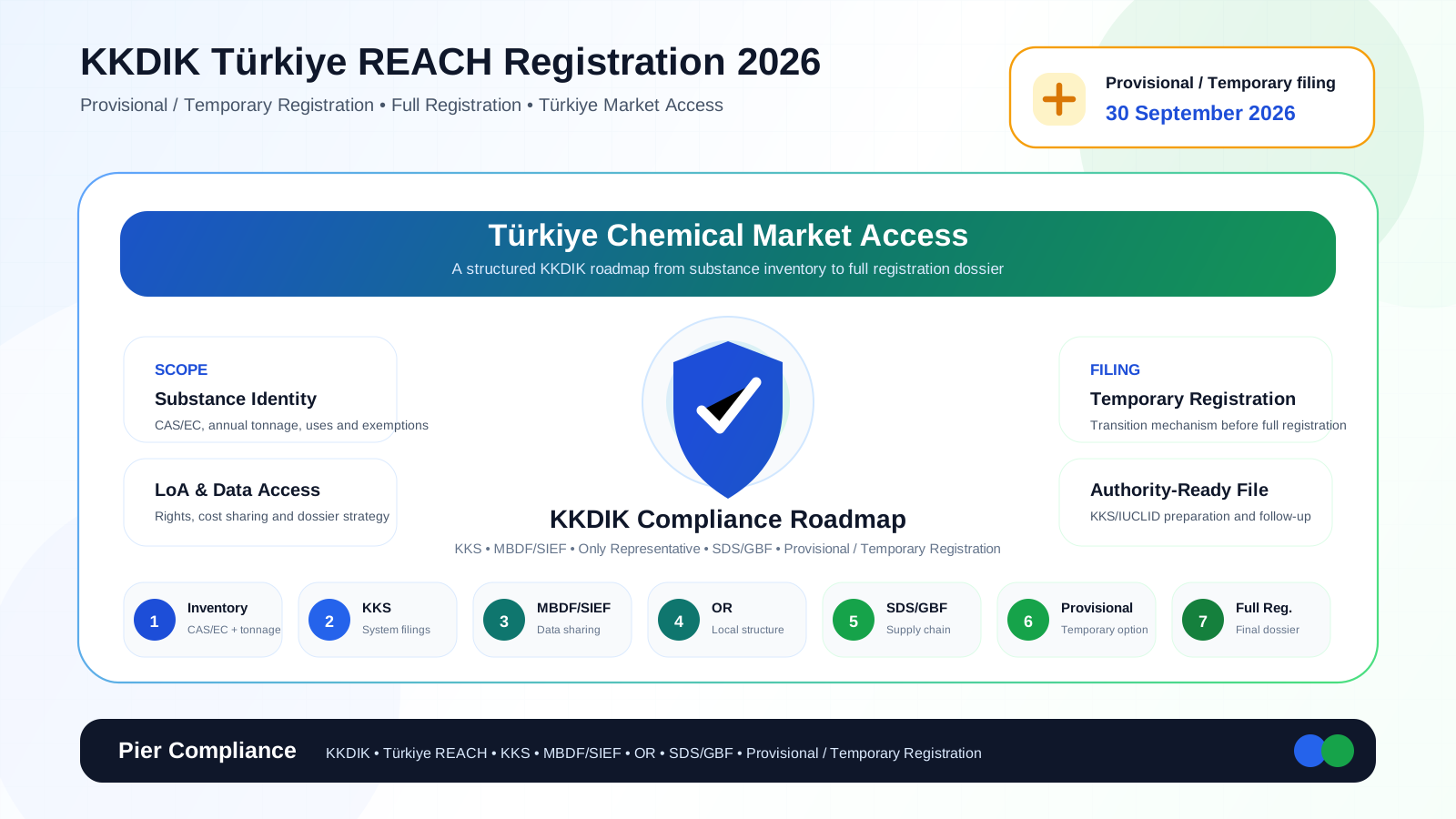
KKDIK Türkiye REACH Registration Guide 2026: Provisional / Temporary Registration, Full Registration and Market Access
A practical guide to KKDIK Türkiye REACH registration, the 30 September 2026 provisional / temporary registration deadline, Only Representative services, MBDF/SIEF, SDS, LoA and full registration strategy.