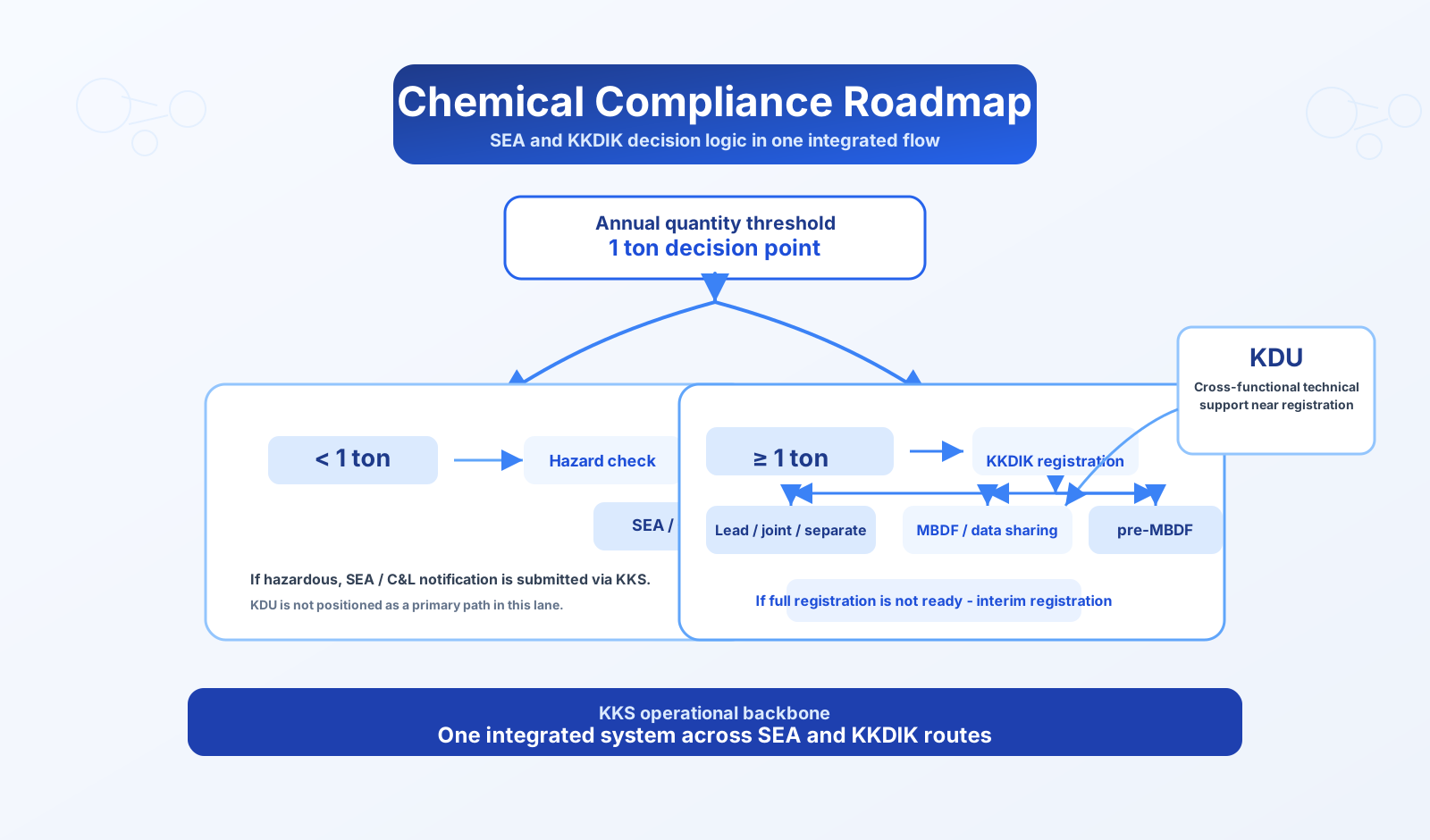
5 Critical Risks in KKDIK and SEA Compliance Before 30 September 2026
Regulatory exposure in Turkey usually increases when teams treat KKDIK Turkey, SEA Regulation and KKS workflows as separate filing tasks. In practice, risk appears at the interface: threshold logic, data consistency, and timing.
This article highlights five recurring risk clusters for international manufacturers, exporters and regulatory affairs teams.
Risk 1: Misreading the 1-ton threshold
The 1-ton threshold is a regulatory trigger, not only a volume metric. If annual quantities fluctuate, route selection can shift between SEA-focused obligations and KKDIK registration planning, including individual interim registration scenarios.
Risk 2: Treating SEA notification as an isolated submission
SEA notification quality depends on alignment between classification and labelling logic, product labels and Turkish SDS content. If these are prepared by disconnected teams, KKS submissions become difficult to defend.
Risk 3: Managing Pre-MBDF and MBDF as clerical steps
Pre-MBDF and MBDF are strategy stages for data-sharing architecture, lead/joint decisions and timeline control. Delayed decisions at this stage usually create downstream dossier instability.
Risk 4: Oversimplifying polymer, monomer and substances in articles scope
Polymer scope assumptions often hide monomer, impurity and reactive component implications. For substances in articles, SVHC tracking is only reliable when supplier data is structured early and reviewed against classification and labelling requirements.
Risk 5: Technical dossier inconsistency across documents
A dossier may appear complete but still fail quality checks if KKS declarations, Turkish SDS/Safety Data Sheet content and technical evidence use inconsistent terminology or hazard logic. This is one of the most common causes of late corrections.
Operational actions for regulatory teams
- Segment substances by tonnage, hazard profile and supply-chain role.
- Document route logic per substance: SEA, KKDIK, or both.
- Run early Pre-MBDF/MBDF governance for substances above 1 ton.
- Validate CLP-aligned classification and labelling language across KKS and SDS.
- Keep an escalation path for individual interim registration before deadlines.
Useful links:
- KKDIK service
- Biocidal Product Authorization Services
- Regulatory management service
- SDS preparation service
- Contact
FAQ (4 Questions)
What is the most critical decision before 30 September 2026?
Evaluate 1-ton threshold exposure, SEA notification obligations and the need for individual interim registration together at substance level.
Why should polymer and monomer assessments be handled separately?
Polymer assumptions do not eliminate risk automatically; monomer composition, reactive constituents and impurities can change registration scope and dossier strategy.
What happens if Turkish SDS content and KKS declarations are inconsistent?
Inconsistencies can trigger SEA compliance gaps, dossier corrections, enforcement questions and timeline delays.
Why are substances in articles and SVHC tracking a management risk?
Late supplier data can create cascading non-conformities across customer communication, SEA logic and dossier evidence quality.
Frequently asked questions
- What is the most critical decision before 30 September 2026?
- Evaluate 1-ton threshold exposure, SEA notification obligations and the need for individual interim registration together at substance level.
- Why should polymer and monomer assessments be handled separately?
- Polymer assumptions do not eliminate risk automatically; monomer composition, reactive constituents and impurities can change registration scope and dossier strategy.
- What happens if Turkish SDS content and KKS declarations are inconsistent?
- Inconsistencies can trigger SEA compliance gaps, dossier corrections, enforcement questions and timeline delays.
- Why are substances in articles and SVHC tracking a management risk?
- Late supplier data can create cascading non-conformities across customer communication, SEA logic and dossier evidence quality.
Related Posts
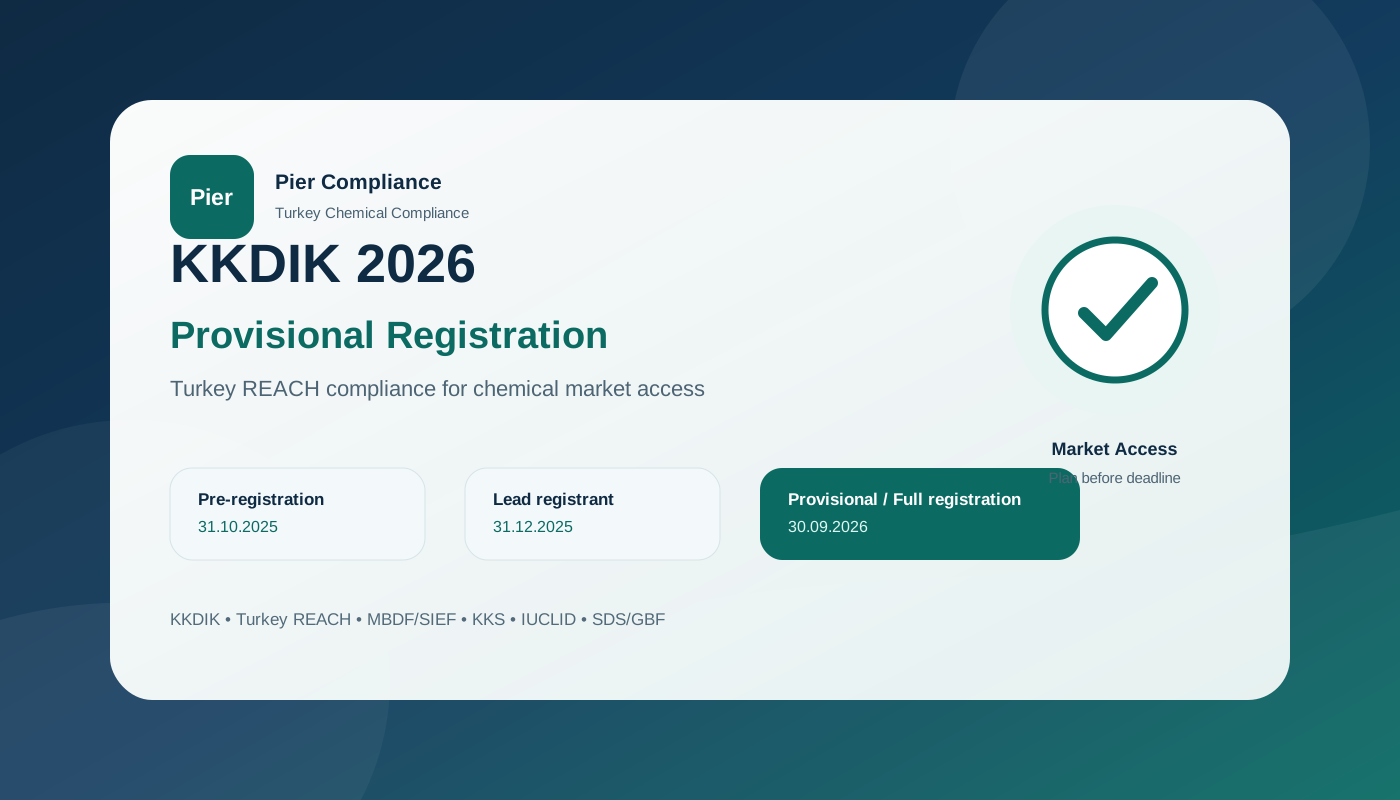
KKDIK Registration and Consulting Services 2026: Provisional Registration, Individual Filing and Turkey REACH Compliance
Pier Compliance supports companies with KKDIK 2026 pre-registration, MBDF/SIEF, lead and co-registration, individual provisional registration, full registration, KKS and IUCLID dossiers.
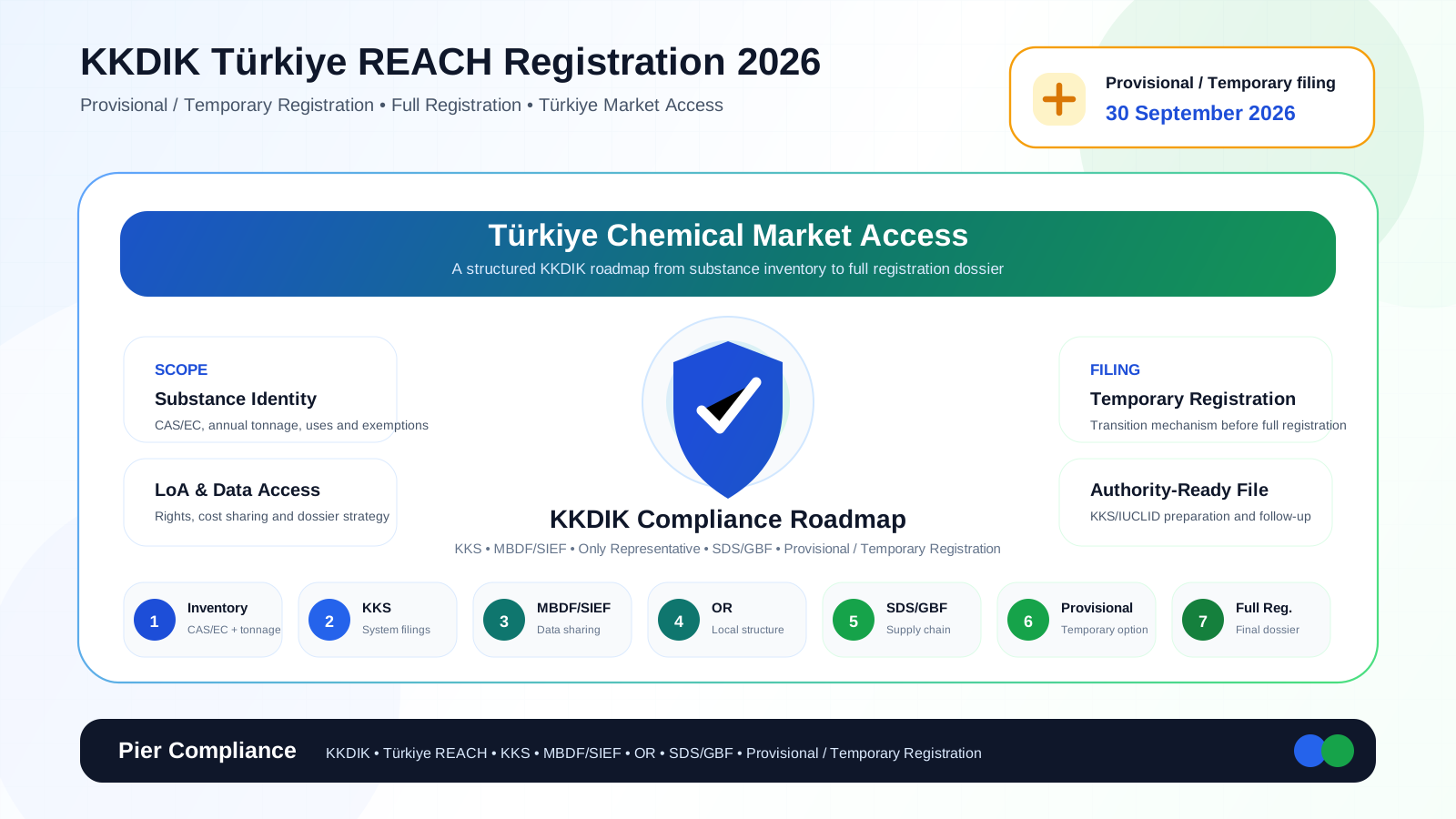
KKDIK Türkiye REACH Registration Guide 2026: Provisional / Temporary Registration, Full Registration and Market Access
A practical guide to KKDIK Türkiye REACH registration, the 30 September 2026 provisional / temporary registration deadline, Only Representative services, MBDF/SIEF, SDS, LoA and full registration strategy.
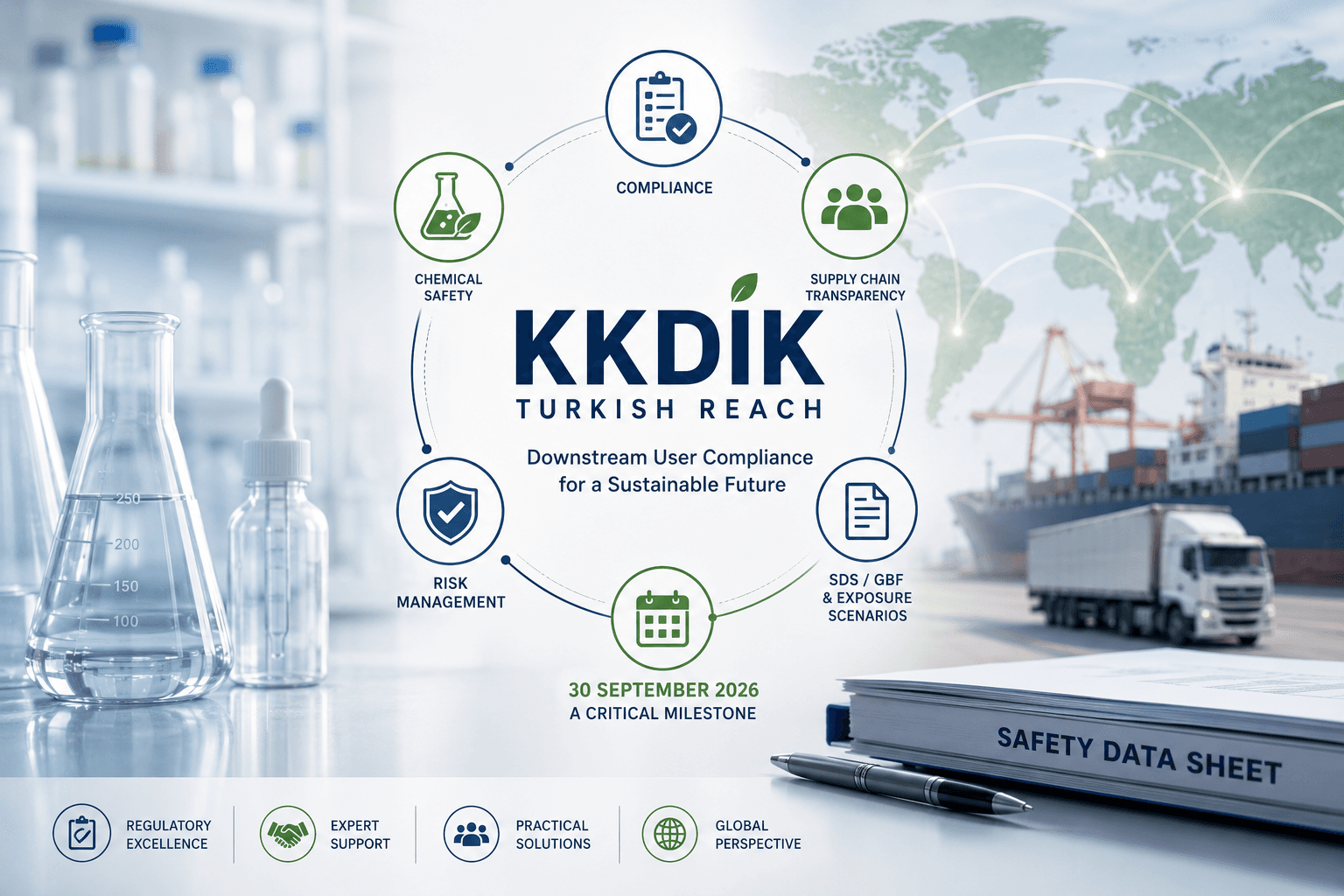
KKDIK Downstream Users: What You Need to Know Before 30 September 2026
Before the 30 September 2026 KKDIK interim registration milestone, downstream users should review use notification, SDS alignment, exposure scenarios and supply-chain roles. Pier Compliance supports role mapping and Chemical Assessment Specialist–approved SDS.