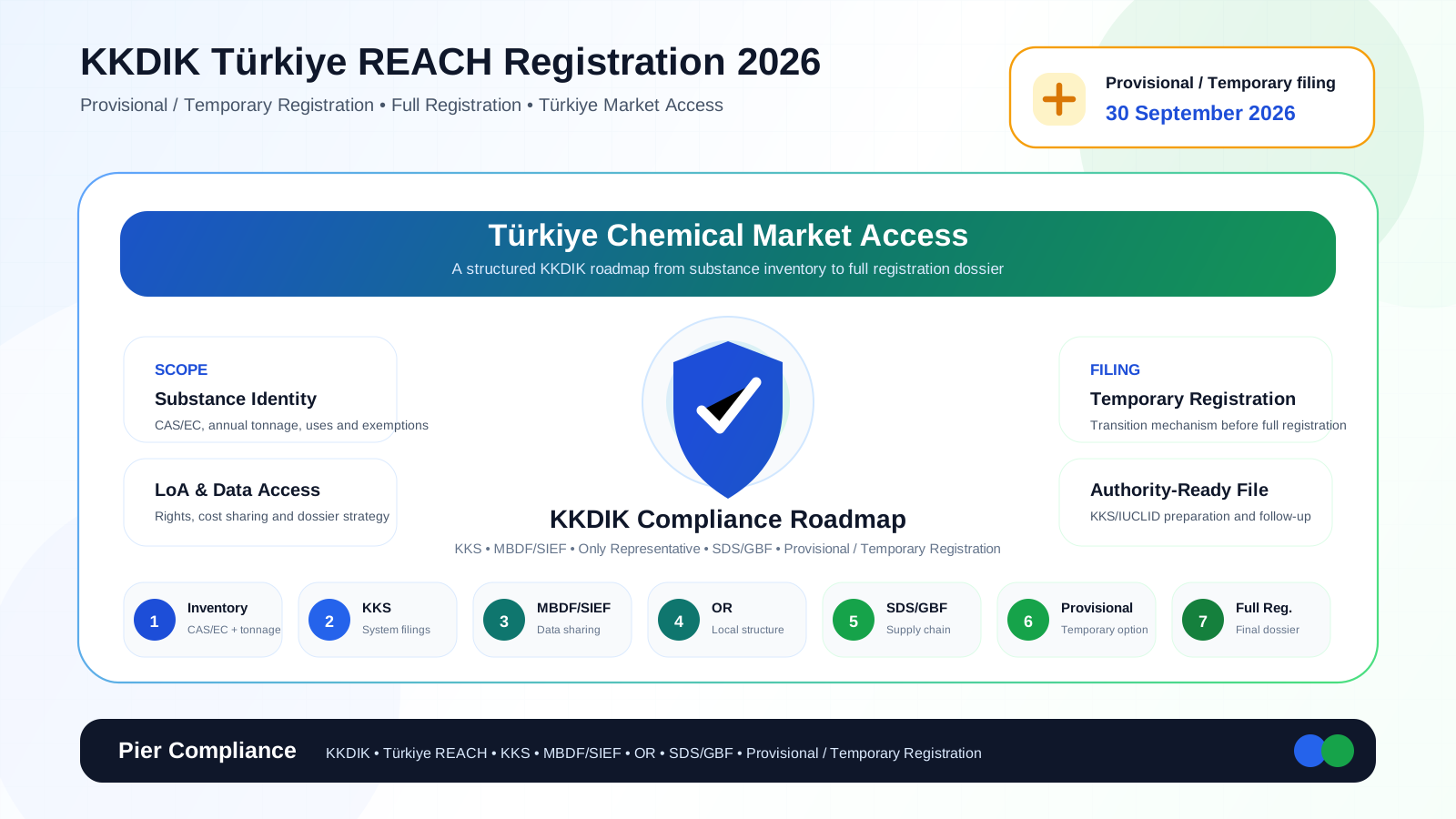
KKDIK Türkiye REACH Registration Guide 2026: Provisional / Temporary Registration, Full Registration and Market Access
KKDIK is Türkiye’s framework for registering, evaluating, authorising and restricting chemicals — widely called Türkiye REACH or Turkey REACH. This guide aligns the 30 September 2026 provisional / temporary registration milestone with KKS, MBDF/SIEF, Only Representative structures, SDS, LoA and full registration planning. For complementary depth, see our Turkey chemical regulation overview and provisional / temporary registration deadline articles.
Executive summary
KKDIK is Türkiye’s chemical registration framework, often referred to as Türkiye REACH. The 30 September 2026 provisional / temporary registration deadline is a critical milestone for companies placing substances on the Turkish market. Pier Compliance supports KKS filings, MBDF/SIEF communication, SDS review, Only Representative structures and full registration strategy.
Key takeaways
- KKDIK is the core regulation for chemical registration and safe management in Türkiye.
- Substances placed on the Turkish market at one tonne or more per year may trigger registration obligations unless exempt.
- 30 September 2026 is a critical date for provisional / temporary registration planning.
- Provisional / temporary registration does not remove full registration obligations where they apply.
- An Only Representative may help non-Turkish manufacturers manage Türkiye market access and customer confidentiality.
- Pier Compliance provides end-to-end support on KKDIK registration, SDS, MBDF/SIEF, KKS, LoA and full registration strategy.
What is KKDIK?
KKDIK is Türkiye’s regulation on the registration, evaluation, authorisation and restriction of chemicals, structurally parallel to EU REACH but operated through national systems.
Short answer: KKDIK is Türkiye’s regulation on the registration, evaluation, authorization and restriction of chemicals. It follows a REACH-like approach, but operates through a separate Turkish system involving KKS, MBDF/SIEF communication, certified experts and national authority procedures.
In practice KKDIK answers: which substances require registration, who is the registrant, which data apply to which tonnage band, and how provisional / temporary registration links to full registration. Hazard profile alone does not define the entire scope — exemptions and the 1 tonne/year threshold are decisive.
What is Türkiye REACH?
Türkiye REACH, Turkey REACH and Turkish REACH describe the KKDIK framework. Workflows run through the Chemical Registration System (KKS) under the Ministry of Environment, Urbanization and Climate Change of Türkiye.
Türkiye REACH anchors chemical market access planning for exporters, Turkish importers, formulators and downstream users. EU REACH compliance is a strong reference — but the Turkish programme should be managed separately.
Why is KKDIK critical for market access?
KKDIK compliance is a direct precondition for supply continuity, customer audits and purchasing approval when placing substances or mixtures on the Turkish market.
Unclear registration status can trigger customs questions, distributor hesitation and SDS review delays. Portfolios without a defensible provisional / temporary registration plan before 30 September 2026 may accumulate commercial risk. Tonnage, role and dossier scope should be assessed per substance.
Who is this guide for?
This guide is designed for:
- Turkish manufacturers and importers
- Non-Turkish manufacturers exporting to Türkiye
- Distributors and downstream users (including formulators)
- Global suppliers evaluating an Only Representative model
- Compliance teams managing KKS, MBDF and individual provisional / temporary registration timelines
- Companies with EU REACH experience building a separate Türkiye programme
Regulatory, procurement and operations teams should work from the same substance list and tonnage table.
KKDIK vs EU REACH
KKDIK mirrors EU REACH in structure, but EU REACH registration alone does not automatically discharge KKDIK obligations in Türkiye.
| Topic | EU REACH | KKDIK / Türkiye REACH |
|---|---|---|
| Platform | ECHA / REACH-IT | KKS |
| Data sharing | SIEF | Pre-MBDF / MBDF |
| Representation | OR (EU) | Only Representative (Türkiye) |
| Documentation | SDS (CLP) | SDS/GBF, certified-expert expectations |
| LoA | REACH scope | Separate verification for KKDIK |
REACH inventory is a strong start; Turkish tonnage, supply chain mapping and KKS dossiers must be built separately.
Why is 30 September 2026 important?
30 September 2026 is a structuring milestone for provisional / temporary registration and member submission planning for in-scope substances on the Turkish market at ≥1 tonne/year unless exempt.
Short answer: 30 September 2026 is a critical milestone for KKDIK provisional / temporary registration and member submissions. Companies should assess their registration strategy before this date to protect Türkiye market access and supply continuity.
The date is not limited to “high tonnage” or “hazardous only” narratives — correctly aggregated lower volumes can still be in scope. See our dedicated KKDIK registration deadline 2026 article for timeline context (provisional / temporary registration is sometimes referred to as an interim mechanism in official discourse).
What is the difference between pre-registration, provisional / temporary registration and full registration?
Pre-registration, provisional / temporary registration and full registration serve different purposes and should not be treated as interchangeable.
Short answer: Provisional / temporary registration does not replace full registration. It should be treated as a transitional mechanism that helps companies maintain continuity while preparing their full registration strategy.
Pre-registration vs provisional / temporary vs full registration
| Process | Purpose | Why it matters | Pier Compliance support |
|---|---|---|---|
| Pre-registration | Make the substance visible in KKS and MBDF/SIEF workflows | Foundational step for joint registration and data sharing | Substance identity, CAS/EC, tonnage and representation review |
| Provisional / temporary registration | Manage transition with a limited dataset before full registration | Critical for Türkiye market access ahead of 30 September 2026 | Individual provisional / temporary dossier, justification, KKS filing and follow-up |
| Full registration | Register the substance with the complete technical file | Long-term compliance and supply continuity | IUCLID/KKS dossier, LoA, CSR, MBDF/SIEF and full registration strategy |
Pre-MBDF or pre-registration alone should not be treated as sufficient compliance.
How does the KKDIK registration process work step by step?
KKDIK registration typically follows these steps; depth and sequencing vary by substance profile:
- Substance inventory — CAS/EC, trade names, mixture components, Turkish tonnage
- Scope and exemption review — 1 tonne/year threshold, polymer/precursor scenarios
- Role analysis — manufacturer, importer, downstream user or Only Representative
- KKS account and pre-registration / Pre-MBDF — substance matching, MBDF communication
- SEA/CLP and SDS alignment — classification consistency
- Provisional / temporary registration (where required) — strategy before 30 September 2026
- LoA / data sharing — lead registrant, joint submission, consortium
- Full registration plan — technical file and CSR by tonnage band
Authority information requests may arise at any stage; dossier revision discipline should be maintained throughout.
What is an Only Representative?
An Only Representative (OR) allows a non-Turkish manufacturer to manage KKDIK obligations through a legal representative established in Türkiye; it is not mandatory in every scenario but is common with multiple Turkish importers.
Short answer: An Only Representative structure helps non-Turkish manufacturers manage KKDIK obligations through a legal representative established in Türkiye. It may reduce importer burden, protect customer confidentiality and centralize KKS submissions.
Benefits include a single KKS contact, consistent MBDF positioning and fewer fragmented importer-led filings. Contracts, authority and supply-chain mapping should be clarified early. Evaluate via our KKDIK registration support service page.
Why does the MBDF/SIEF process matter?
MBDF coordinates data sharing among potential registrants for the same substance — analogous to SIEF under EU REACH.
Pre-MBDF supports substance matching and early coordination. Passive MBDF, unclear lead registrants or unavailable LoA access can block progress after the provisional / temporary stage. See our MBDF, consortium and LoA article for data-sharing detail.
Lead registrant and co-registrant strategy
The lead registrant coordinates the joint dossier; co-registrants join with their own Turkish tonnage and use information.
Waiting for a lead is not always the lowest-risk option — individual provisional / temporary registration may be assessed when timelines tighten. LoA cost, data scope and contract terms should be planned early. Member registrants remain responsible for KKS consistency.
Why do tonnage bands matter?
Tonnage bands influence official fees, data depth and chemical safety report (CSR) requirements.
| Tonnage band | General effect |
|---|---|
| 1–10 t/year | More limited dataset; registration still assessed |
| 10–100 t/year | Medium technical file expectations |
| 100–1000 t/year | Comprehensive file and CSR discussion |
| 1000+ t/year | Highest data and dossier depth |
The 1 tonne/year threshold does not mean “low volume = no registration”. Tonnage should be supported by supplier declarations, production/import records and use data.
SDS/GBF and SEA/CLP alignment
SDS content should align with the registration file: classification, labelling, uses and exposure information must be consistent.
Turkish SDS/GBF should follow KKDIK expectations; SEA/CLP notification should be complete where required. Plan SDS preparation together with our SEA notification via KKS guidance.
Documents commonly reviewed
Typical documents reviewed during audits and dossier preparation:
- Substance list
- CAS/EC numbers
- Annual Turkish tonnage data
- Importer and customer list
- SDS / safety documentation
- SEA/CLP classification information
- Existing EU REACH registration information
- LoA or data-access documents
- Analytical data and substance identity evidence
- Use descriptions
- Supply-chain information
- Pre-registration or KKS registration outputs
Missing data should be justified and collected with a written plan — not deferred to the final weeks.
KKDIK roadmap for companies exporting to Türkiye
Non-Turkish manufacturers can use this roadmap:
- Confirm substances supplied to Türkiye and annual tonnage
- Map importer / distributor roles and contractual obligations
- Choose Only Representative vs importer-led registration
- Align KKS, Pre-MBDF and provisional / temporary registration with 30 September 2026
- Update SDS and SEA/CLP positions
- Structure LoA and full registration with MBDF
- Prepare registration references and written confirmations for customers and customs
If a REACH dossier exists, run a separate data-usability analysis for KKDIK.
Common mistakes
- Treating pre-registration as “done”
- Confusing provisional / temporary registration with full registration
- Mis-calculating Turkish tonnage bands
- Clarifying importer and supply-chain data too late
- Starting MBDF/SIEF communication too late
- Not checking lead registrant status
- Assuming EU REACH data is automatically usable in Türkiye
- SDS inconsistent with registration information
- Evaluating LoA and data-access costs too late
- Assuming 30 September 2026 matters only for high-tonnage or hazardous substances
Pier Compliance KKDIK services
Pier Compliance provides end-to-end Türkiye REACH support:
- KKDIK scope assessment
- Substance inventory preparation
- CAS/EC and substance identity review
- Türkiye tonnage band assessment
- KKS company account and system filings
- Only Representative service
- Pre-registration and late pre-registration review
- Individual provisional / temporary registration dossier preparation
- MBDF/SIEF communication and follow-up
- Lead registrant / co-registrant strategy
- LoA and data access assessment
- SDS preparation and review
- SEA/CLP classification review
- IUCLID/KKS dossier preparation
- Support for authority information requests
- Full registration roadmap
- Türkiye market access and customer communication support
Explore KKDIK registration support and SDS preparation. General questions: frequently asked questions.
Türkiye market access checklist
Pre-market checklist for Türkiye:
- Substance inventory and CAS/EC verified?
- Annual Turkish tonnage band (≥1 t/year) clear?
- Exemptions assessed per substance?
- Registrant role (manufacturer / importer / OR) selected?
- KKS and Pre-MBDF/MBDF status current?
- 30 September 2026 provisional / temporary registration plan ready?
- SDS, SEA/CLP and registration file aligned?
- LoA and full registration roadmap defined?
- Registration references and written confirmations ready for customers / customs?
Extend the list for larger portfolios.
Conclusion
KKDIK Türkiye REACH registration requires coordinated management of pre-registration, provisional / temporary registration, full registration, KKS, MBDF, Only Representative structures and SDS discipline. The 30 September 2026 milestone should prompt portfolio and tonnage clarity now — not in the final weeks.
If you are planning KKDIK registration, provisional / temporary registration or an Only Representative structure for the Turkish market, Pier Compliance can help you build a practical and compliant roadmap: contact Pier Compliance · KKDIK services · info@piercompliance.com
Frequently asked questions
- What is KKDIK?
- KKDIK is Türkiye’s regulation on the registration, evaluation, authorisation and restriction of chemicals. It follows a REACH-like approach, but filings run through KKS and Turkish-specific processes (MBDF/SIEF, certified experts, national authority review) must be managed as a separate programme.
- Is KKDIK the same as Türkiye REACH?
- Yes. Türkiye REACH, Turkey REACH and Turkish REACH commonly describe the KKDIK framework. Official registration and notification workflows are handled through the Chemical Registration System (KKS).
- Why is 30 September 2026 important?
- 30 September 2026 is a structuring milestone for provisional / temporary registration planning for in-scope substances placed on the Turkish market at one tonne or more per year unless exempt. Late preparation can affect supply continuity and customer audits; obligations should be confirmed per substance and role.
- Does provisional / temporary registration replace full registration?
- No. Provisional / temporary registration does not remove full registration obligations where they apply. It is a transitional stage while technical dossiers and data-sharing positions mature; full registration, tonnage band, MBDF/SIEF and LoA strategy should be planned in parallel.
- What should foreign manufacturers exporting to Türkiye do under KKDIK?
- Clarify the substance portfolio, annual Turkish tonnage and supply chain; define the registration route on KKS (pre-registration, provisional / temporary registration, full registration). In many scenarios an Only Representative or a controlled importer-led model should be assessed.
- Is it mandatory to use an Only Representative?
- Not in every scenario; obligations depend on role and supply structure. For non-Turkish manufacturers, an Only Representative is frequently used to centralise obligations and balance importer workload, but the model must match contracts and KKS actors.
- Can EU REACH data be used for KKDIK?
- REACH experience and datasets are a strong starting point, but EU REACH registration or a REACH LoA alone does not automatically confer Turkish compliance. Data-use rights, LoA scope and KKDIK dossier requirements should be verified separately.
- How is the cost of KKDIK registration determined?
- Costs vary with tonnage band, individual vs joint submission, data availability, LoA, MBDF/SIEF coordination, SDS work and consultancy scope. Official KKS fees and technical preparation should be budgeted separately; a single figure rarely applies across an entire portfolio.
- Why is SDS important in the KKDIK process?
- Classification, labelling, uses and exposure information should align with the registration file. Turkish SDS/GBF expectations, SEA/CLP notification and certified-expert review should be planned together; inconsistent documentation increases audit and customer risk.
- How does Pier Compliance support KKDIK compliance?
- We support scope assessment, substance inventory, KKS management, Only Representative services, Pre-MBDF/MBDF, individual provisional / temporary registration, LoA review, SDS/GBF, SEA/CLP and full registration roadmaps. See our [KKDIK registration support](/en/services/kkdik) and [contact](/en/contact) pages.
Related Posts
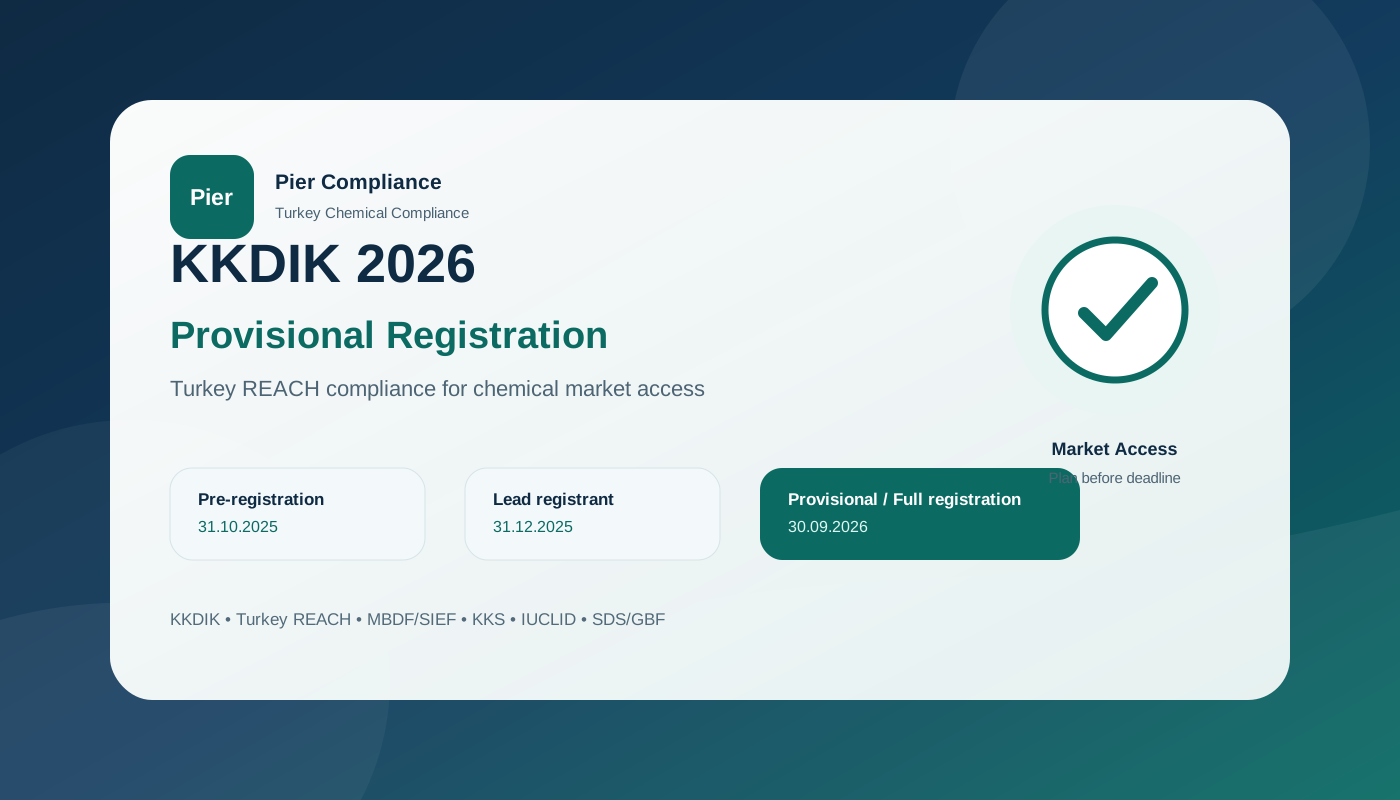
KKDIK Registration and Consulting Services 2026: Provisional Registration, Individual Filing and Turkey REACH Compliance
Pier Compliance supports companies with KKDIK 2026 pre-registration, MBDF/SIEF, lead and co-registration, individual provisional registration, full registration, KKS and IUCLID dossiers.
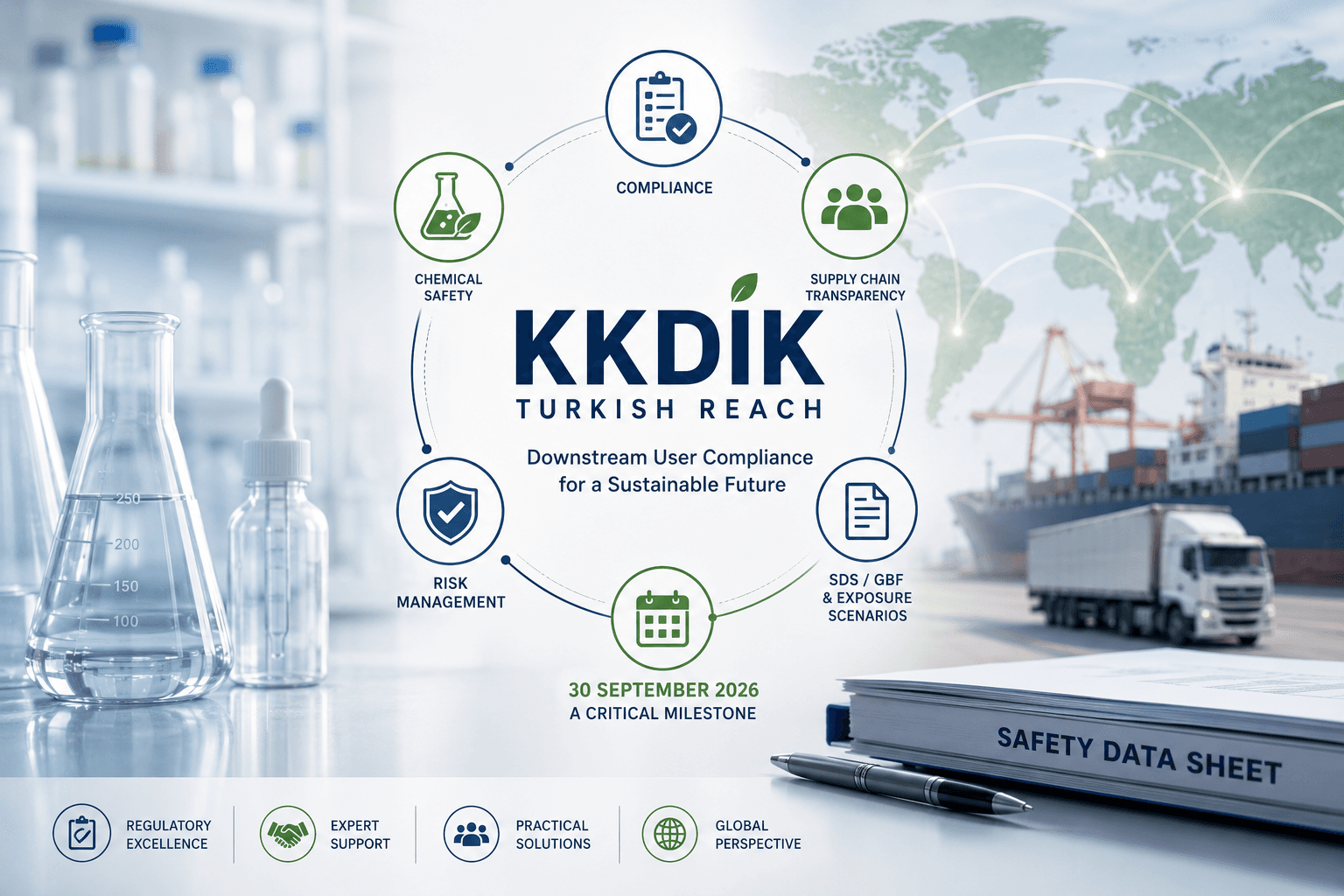
KKDIK Downstream Users: What You Need to Know Before 30 September 2026
Before the 30 September 2026 KKDIK interim registration milestone, downstream users should review use notification, SDS alignment, exposure scenarios and supply-chain roles. Pier Compliance supports role mapping and Chemical Assessment Specialist–approved SDS.
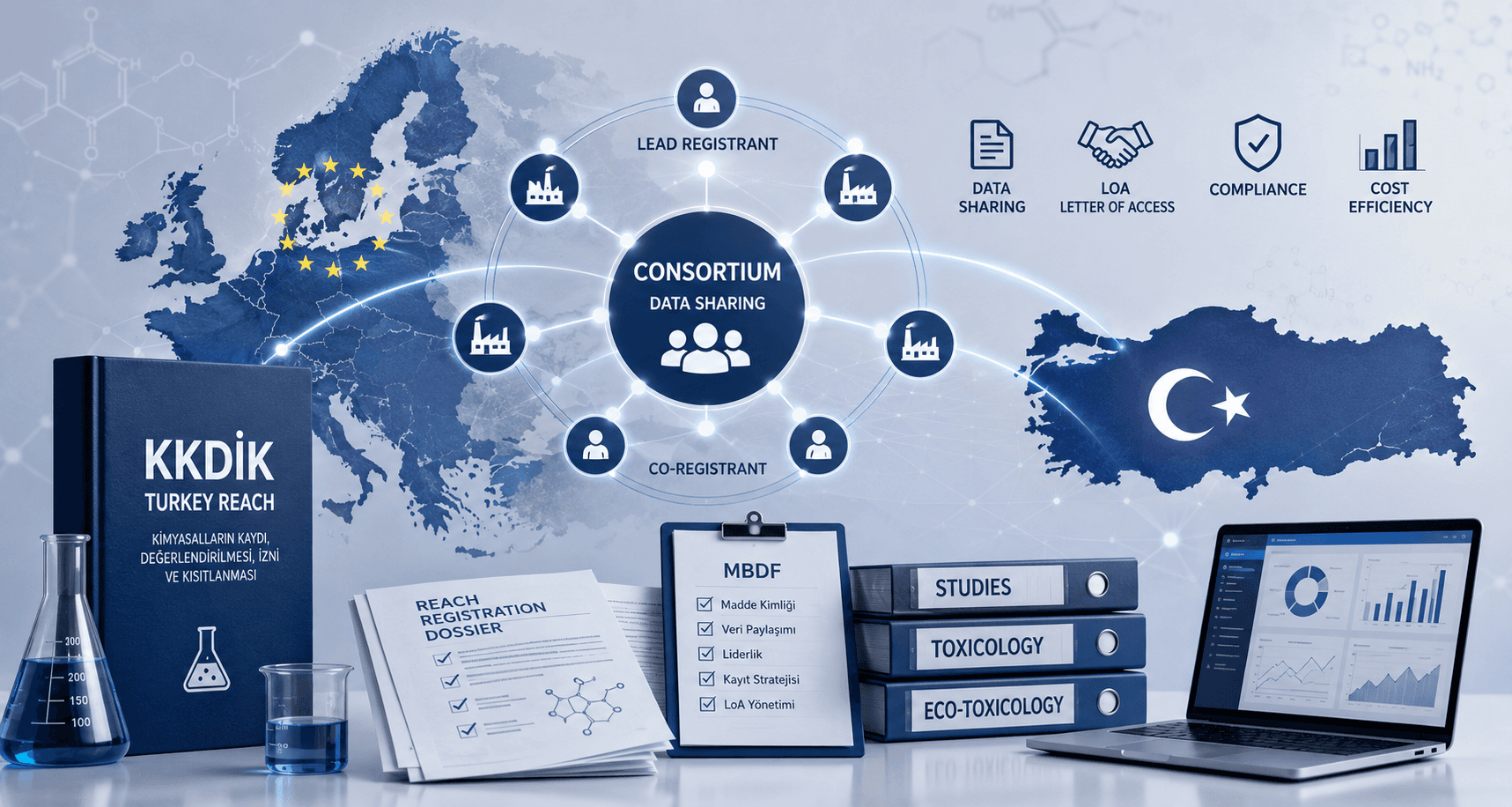
KKDIK and Consortiums: Why MBDF, LoA and REACH Data Sharing Matter in Türkiye
What is a KKDIK or REACH consortium, why is it needed, and how do MBDF, LoA, lead registrant and data sharing affect Turkey REACH registration? Practical guidance from Pier Compliance.