
KKDİK Individual Interim Registration 2026: KKS Process, KDU, Official Fee and the Lead Registration Option
In the KKDİK (Turkish REACH) process, “interim registration” has become more than a purely administrative step for 2026. For many firms it works as a practical assurance mechanism: it helps align timelines, manage data readiness, and prepare a submission that can be defended technically.
The Ministry’s emphasis on individual interim registration is driven by a simple operational reality. Where lead selection and consortium coordination are delayed, companies can be forced into last-minute decisions—creating risk for both dossier readiness and market supply continuity. By making the individual interim pathway visible inside KKS, the Ministry supports a route where firms can continue preparing through KKS without waiting for every consortium detail to become final.
Importantly, individual interim registration is not meant to replace the lead/consortium model. The correct route depends on substance structure, stakeholder coordination maturity, and the data acquisition timetable.
Why is the Ministry highlighting individual interim registration?
In the Ministry’s communication dated 03 March 2026, the guidance stresses that firms should be informed and prepared up to a critical date: 30 September 2026. The objective is not to “remove” consortium logic, but to prevent delays in lead/consortium processes from translating into filing risk at company level.
In practice, joint registration workflows often require decisions on leadership, data sharing terms, and internal responsibilities. If these items slip, companies may postpone essential preparatory work: SDS/GBF revisions, analytical data reconciliation, and the planning needed for KDU involvement and official fees.
The individual interim registration route addresses this problem directly. It allows firms to keep their preparation momentum and reduce the likelihood of a late-stage compliance scramble.
How does individual interim registration work in KKS (step-by-step)?
Think of the following sequence as a compliance-safe operating order. The exact screens and fields can vary by substance and role, but the logic is consistent:
-
Verify the pre-MBDF status for the relevant substance (before filing)
Start by confirming the pre-MBDF status for the specific substance inside KKS. This step supports the correct template and helps ensure the dossier is defensible later. -
Open the “individual interim registration” template in KKS
Use the KKS substance management flow to reach the relevant substance (“go to the substance” step), then open the template for KKDİK interim registration. -
Fill the key template sections (1, 2, 3, 4, 11, 13, 14)
These sections form the technical backbone of your submission. SDS/GBF content, analytical data, use information, exposure scenario logic, and existing technical knowledge should be consistent with each other.
The goal is not only to “complete fields”, but to prepare a file that is technically supportable. -
Add KDU information / KDU declaration and upload the relevant KDU qualification certificate
KDU input must be reflected in the KKS process. The KDU information, supporting documentation, and the SDS/GBF preparation approach should align with the dossier’s classification and evaluation narrative. -
Plan the official fee component early
The official fee dimension is determined based on the Ministry’s revolving-fund unit price list. While you don’t need to “quote numbers” in a narrative, you should include fee budgeting in your submission plan.
Consider that fee totals may depend on the applicable framework and company size, and always ensure internal approvals match the KKS timeline. -
Perform final consistency checks and submit
Last-minute corrections increase risk. Before sending, validate title-by-title consistency (classification vs. use vs. exposure scenario vs. available technical evidence).
What information is requested in the KKS template?
Inside KKS, the headings below are the most visible structure of the interim dossier. For individual interim registration, these areas deserve special attention:
- 1. General information: framing details for the submission.
- 2. Classification & labelling and PBT assessment: technical basis for classification and the logic behind PBT consideration.
- 3. Manufacturing, uses and exposure: how uses are represented and how exposure scenario reasoning is supported.
- 4. Physical and chemical properties: technical parameters mapped to the overall evaluation logic.
- 11. Guidance on safe use: risk reduction expectations and alignment with SDS/GBF.
- 13. Assessment reports: evaluation narrative and documentation traceability.
- 14. Information requirements: how data gaps are managed and how the current technical knowledge can be defended.
When these are completed coherently, the submission becomes not only “administratively present”, but also audit-ready and maintainable.
Why is KDU input (declaration + qualification certificate) critical?
KDU input strengthens the credibility of the KKDİK dossier and supports the required compliance chain—especially for SDS/GBF and technical evaluation alignment.
A common operational risk is the “SDS translation-only” approach, where the SDS is treated as a direct translation without tailoring to the KKDİK/GBF expectations and without aligning with the KDU review workflow. This can extend post-submission correction cycles.
That is why KDU planning should be part of your project plan from day one. For SDS/GBF and KDU signature preparation, see our guide:
SDS (GBF) and KDU signature readiness
Why you should not overlook the official fee dimension
Individual interim registration requires more than data and technical writing. Official fee planning is part of the submission timeline. The official fee component is defined based on the revolving-fund unit price list used by the Ministry.
Even without quoting exact numbers in this article, you should ensure your internal budgeting covers the relevant fee lines in a way that matches KKS submission steps. Otherwise, you may end up with a timeline stall right where speed matters most: during the final review and sending stage.
Does individual interim registration close the lead registration route?
No. Highlighting individual interim registration does not mean the lead/consortium approach is closed.
If you plan to proceed via a lead firm, the lead interim filing remains available. After the lead completes interim registration, member entries can still be completed via KKS. In other words, the lead model remains compatible with KKS workflow.
The key decision is therefore not “individual vs. lead”, but which route best matches substance characteristics, data access, and coordination capacity.
What should firms do now?
Firms should not leave preparation to the last weeks. A reliable outcome in KKDİK individual interim registration comes from a “substance-based strategy” and early data-set readiness.
A practical starting set:
- Substance prioritization: select your first priority substances (based on criticality and timeline pressure).
- Early pre-MBDF verification: confirm the status inside KKS before you finalize your template approach.
- Ensure SDS/GBF + analytical data consistency: classification, use information, and exposure scenario logic must align.
- Build KDU involvement into the project plan: declaration preparation and the qualification certificate should be ready before filing.
- Include official fee planning in the schedule: align internal approvals, procurement/budget steps, and KKS timing.
- Reduce last-minute correction needs: run consistency checks before submission.
For a deeper look at our KKDIK scope, review our KKDIK service page, and if you want to validate your timeline, contact us.
This approach benefits both firms choosing the individual interim route and those following the lead/consortium model.
Short, strong conclusion
In 2026, KKDİK individual interim registration can provide firms with timing assurance—when it is approached as a technically coherent preparation process. The Ministry’s guidance aims to prevent consortium delays from turning into filing risk at company level, with 30 September 2026 as a key planning marker.
Success depends on confirming pre-MBDF, filling KKS template headings (1/2/3/4/11/13/14) with technical consistency, preparing KDU input and supporting documentation, and planning the official fee dimension early. The lead registration option remains open, with KKS enabling member completion after lead interim filings.
FAQ (4 Questions)
What is the deadline for KKDIK individual interim registration?
30 September 2026 is the critical date highlighted for firms’ information and preparation activities.
Is pre-MBDF required?
Yes. Pre-MBDF status confirmation for the relevant substance is the foundation for the correct KKS flow and a defensible dossier.
Why is KDU important?
KDU input and the relevant KDU qualification certificate support SDS/GBF alignment and the compliance chain required in KKS.
If we do individual interim registration, does it close the lead registration route?
No. Lead/consortium registration remains available. After the lead interim filing, member entries can still be completed via KKS.
Sources
Frequently asked questions
- What is the deadline for KKDIK individual interim registration?
- The Ministry’s guidance highlights 30 September 2026 as the critical date for firms to complete their information and preparation activities.
- Is pre-MBDF required?
- Yes. Confirming the pre-MBDF status for the relevant substance is the starting point to ensure the right KKS flow and a defensible dossier.
- Why is KDU input important?
- KDU information and the relevant KDU qualification certificate are key to aligning the SDS/GBF and the KKS submission process with the required compliance standards.
- If we do individual interim registration, does it close the lead registration route?
- No. Opening the individual interim registration route does not eliminate lead/consortium registration. After the lead interim filing, member entries can still be completed through KKS.
Related Posts
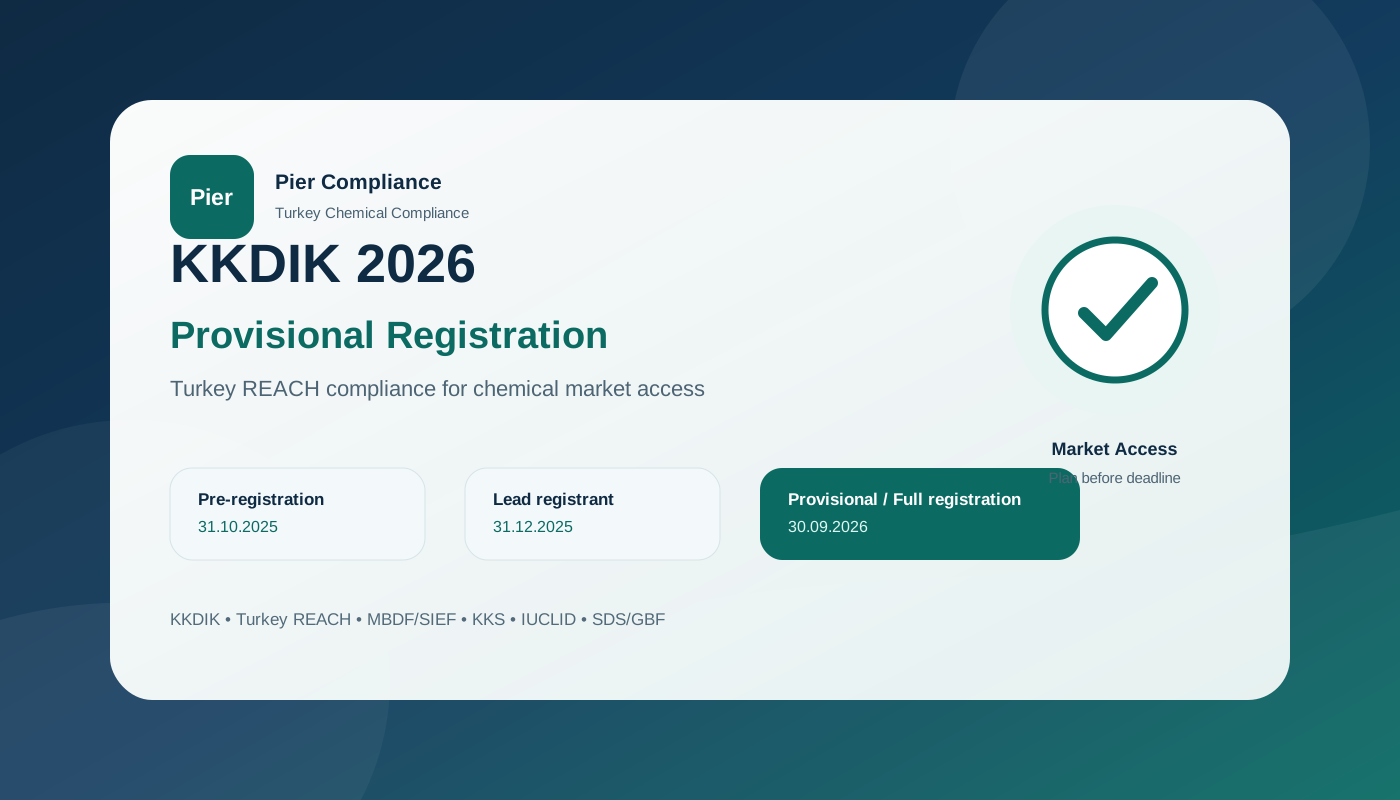
KKDIK Registration and Consulting Services 2026: Provisional Registration, Individual Filing and Turkey REACH Compliance
Pier Compliance supports companies with KKDIK 2026 pre-registration, MBDF/SIEF, lead and co-registration, individual provisional registration, full registration, KKS and IUCLID dossiers.
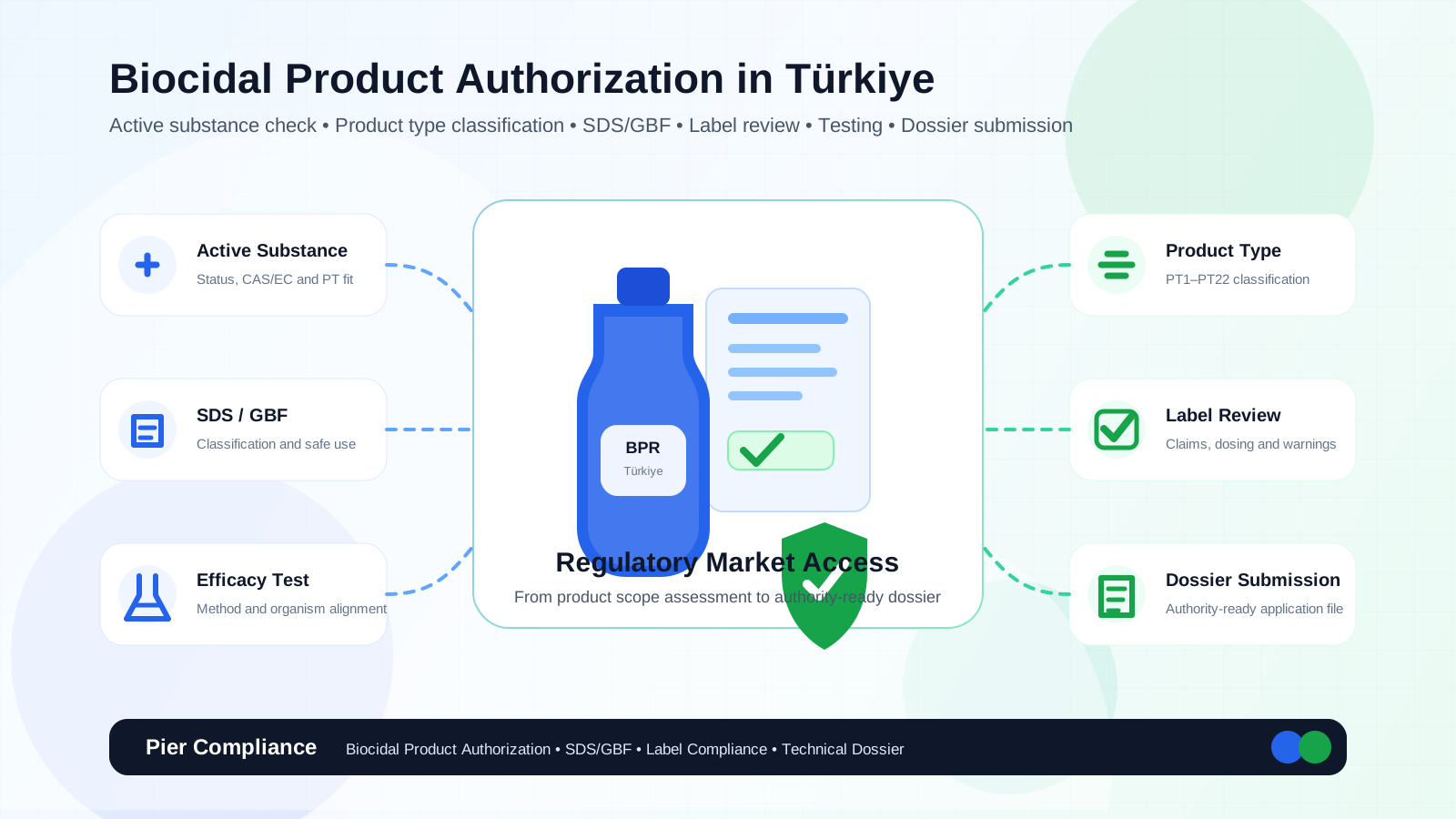
Biocidal Product Authorization in Türkiye: A 2026 Guide to Compliance, Testing and Dossier Preparation
A practical guide to biocidal product authorization in Türkiye, covering active substance checks, product type classification, efficacy tests, SDS, label compliance and technical dossier preparation.
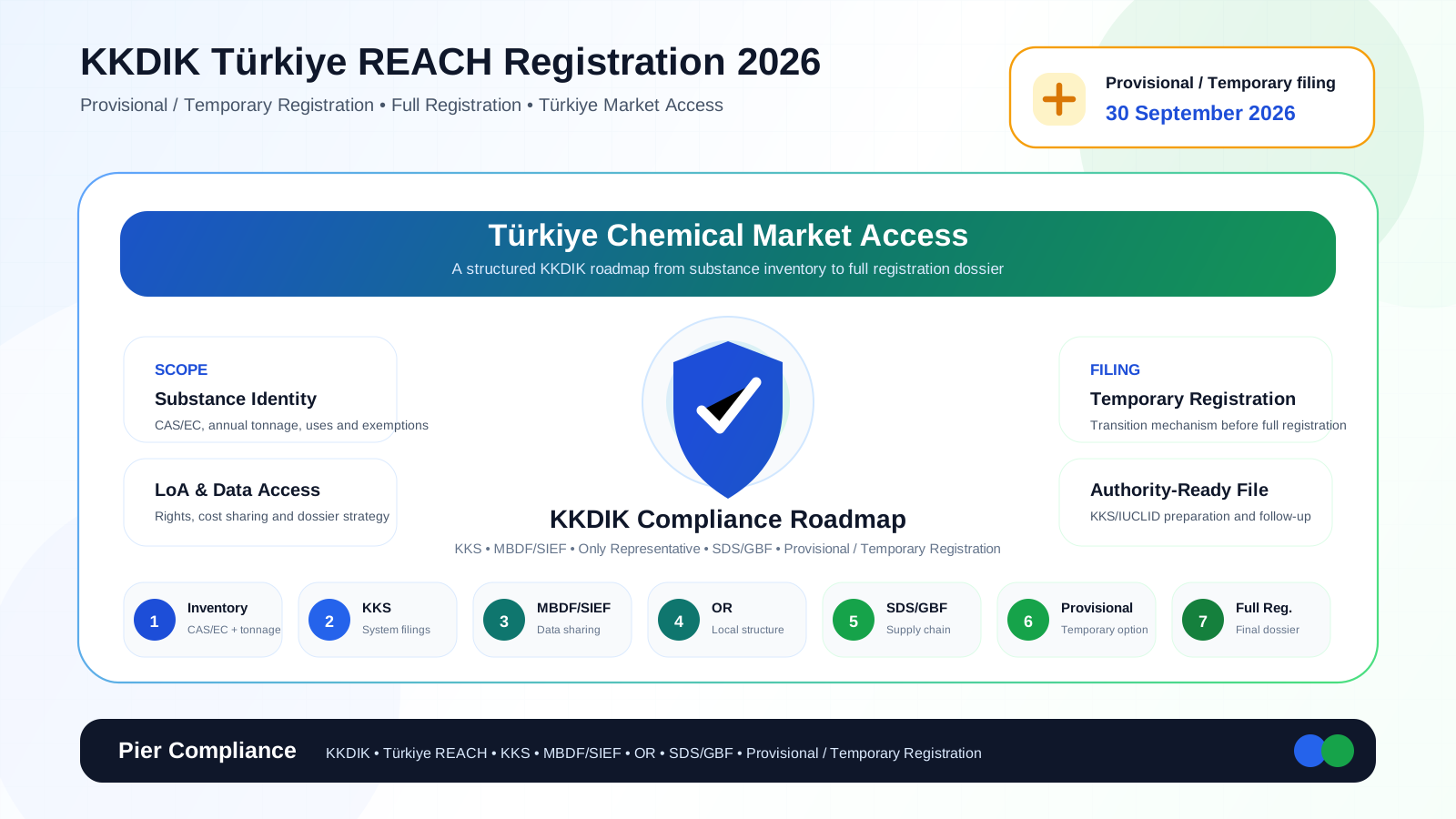
KKDIK Türkiye REACH Registration Guide 2026: Provisional / Temporary Registration, Full Registration and Market Access
A practical guide to KKDIK Türkiye REACH registration, the 30 September 2026 provisional / temporary registration deadline, Only Representative services, MBDF/SIEF, SDS, LoA and full registration strategy.